
Adriano V. Autino, Marie-Luise Heuser, Bernard Foing, Jerry Stone, Patrick Q. Collins, Alberto Cavallo, Gülin Dede, Dennis O’Brien, Sergio Marchisio, Frank White, Werner Grandl, Ghanim Alotaibi
Adriano V. Autino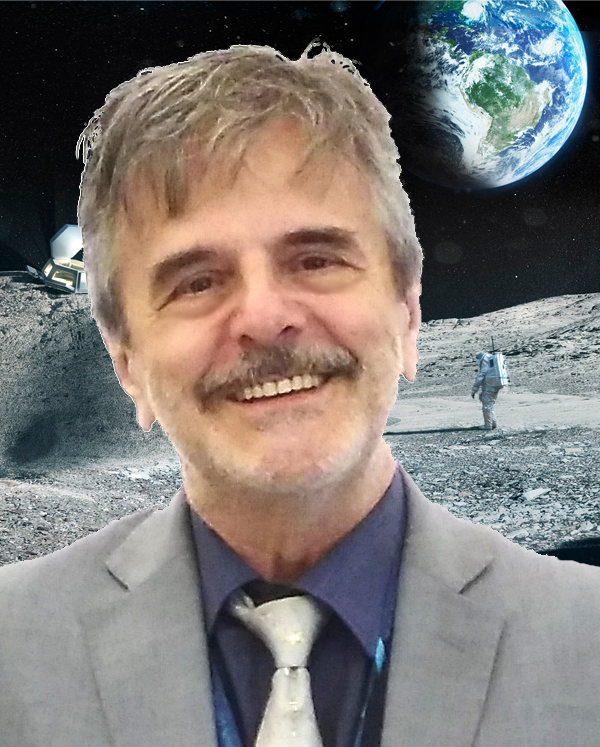 | Space philosopher and small entrepreneur, Adriano Vittorio Autino is co-founder and former president (2008 – 2021) of the Space Renaissance International (SRI). As a not for profit cultural association, SRI promotes the expansion of civilization into outer space. Besides a long carrier in software, industrial automation and systems engineering, he devotes his main effort to the development and further enhancement of the space renaissance philosophy (Space Humanism). Adriano got his diploma in Industrial Electronics in 1969, studied Computer Science at University in Torino, and during 970’s served as software engineer at Honeywell Information Systems Italia. In 980’s, he served as project manager at Sysdata CAP Gemini. During 90’s Adriano was a free lance software consultant. In 2000 he founded Andromeda s.r.l., dealing industrial automation and systems engineering, working mainly in the aerospace segment and infrastructures. He is author of an integrated suite of software tools for project lifecycle management (STEPS). Engaged in social activities since 1970’s, in 1990’s Adriano begun his philosophical reflection on the subject of human expansion beyond the frontiers of our world, and founded the web magazine Technologies of the Frontier, collaborating with many space activists world-wide. In 2008, with others, he initiated the Space Renaissance Initiative, and in 2010 the Space Renaissance International was incorporated, as a not for profit association. Adriano personally organized and managed three World Congresses of Space Renaissance International, the last one held in June 2021. See a full bio and publications, and LinkedIn profile. |
Dr. Marie-Luise Heuser | Dr. phil. Marie-Luise Heuser, philosopher and university lecturer at the Universities of Düsseldorf, Stuttgart, Heidelberg and Braunschweig, most recently at the Institute of Space Systems at the Technical University of Braunschweig. Main research interests are the philosophy of space travel, theories of space since antiquity, philosophy of technology in science fiction, philosophy of nature, metaphysics, ontology and anthropology. Publications: Transterrestrik in der Renaissance. Nikolaus von Kues, Giordano Bruno und Johannes Kepler (2008); Russischer Kosmismus und extraterrestrischer Suprematismus (2008); Space Philosophy (2016); Raumontologie und Raumfahrt um 1600 und um 1900 (2016); Return to the Moon (2020); Husserls Phänomenologie des Fliegens (2020); Der Mensch ist nicht nur für die Erde da. Schellings Philosophie des Weltraums (2020). Dr. Heuser is Head of the Space Renaissance Academy Space Philosophy Laboratory. See a full bio and publications. |
Prof. Bernard Foing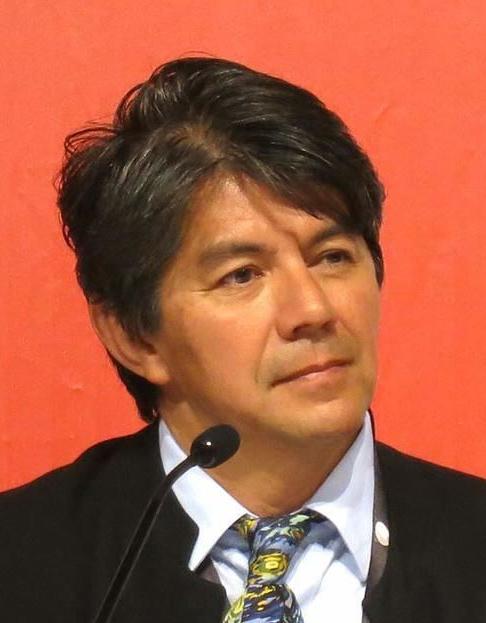 | Prof. Bernard Foing is President of Space Renaissance International, executive director of ILEWG International Lunar Exploration Working Group, and manager of EuroMoonMars programme. Guest prof at VU Amsterdam/Leiden Observatory. Vice-chair of COSPAR Commission B (Moon, planets and small bodies) and PEX Exploration panel, chair of IAF ITACCUS, and member of several IAF committees. Full member of IAA since 2010. Former President of ESTEC staff committee (2012-2017), and former Chief scientist ESA ESTEC (2002-2018). He has worked at ESA Space Science Department at ESTEC (1989-2020), as visiting scientist, staff scientist, study scientist, Research Unit Coordinator, Project scientist and Chief scientist. Born in France, attended Ecole Normale Supérieure of Education & Technology, and became Professor Agrégé of Physical sciences. He obtained a PhD on Astrophysics and Space Techniques at CNRS, with research stays in the US (Lockheed, SacPeak, Boulder, Harvard). He worked 3 years in Chile as astronomer for ESO European Southern Observatory, and as Professor of Astrophysics. Permanent researcher at CNRS Institut d'Astrophysique Spatiale, he obtained the Habilitation for direction of research in 1990. See his bio & publications (PDF). Also on Google Scholar and Wikipedia. |
Jerry Stone | Jerry Stone is the founder of Spaceflight UK, a Fellow of the British Interplanetary Society, former President of The Mars Society UK and a Freelance Space Presenter. He gave his first space talk at school back in 1969 when he was 14; now he does this for a living. He has spoken on space topics at many venues, including The Edinburgh Festival; various Mars Society Conferences; Oxford University; The Palace of Westminster; The Royal Institution; The Royal Observatory; and a rock festival! He presents space workshops in schools across the UK, inspiring pupils with a range of activities. He is developing a new workshop that will allow pupils to simulate what the ESA’s ExoMars rover will do on Mars, investigating soil samples for evidence of life. He is often interviewed on TV and radio, covering space mission and astronomy events. He was also interviewed for Blue Peter about how rockets work! He is a space author. He is described as "One of the leading speakers on space exploration”. He is SRI Director of Gerard K. O’Neill Heritage Development and of Nominations and Awards, chairs the Space Habitats Committee of the Space Renaissance Academy and develops Island Zero, an Academy project. Bio & publications (PDF) |
Patrick Q. Collins | Dr. Patrick Collins is a well-known and respected authority on space economics, space tourism, reusable launch vehicles, and space solar power. He is a professor of economics at Azabu University in Japan and adviser to a number of companies and organisations. The focus of Dr. Collins’ research for the past 25 years has been how to stimulate growth of commercial space activities, the two main opportunities being tourism and energy supply. Dr. Collins performed the first market research on space tourism in Japan in 1993, and collaboratively in the USA in 1995, and it has been very satisfactory for him to see his results confirmed by Nasa-funded studies performed in recent years. He is co-founder of Space Future Consulting, which maintains the Spacefuture.com archive. Dr Collins is closely involved with Japanese work on space tourism and space solar power, subjects which are gradually getting more and more attention, and is Chairman of the Society for Space Tourism of Japan (SSTJ). Extended cv and publications: SpaceFuture |
Alberto Cavallo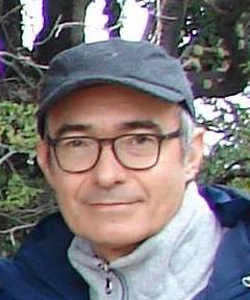 | Alberto Cavallo is an Electrical Engineer, graduated from the Politecnico di Torino in 1985. He began his activity with designing electric systems in Fiat Engineering, the engineering and construction company of the FIAT Group, moving soon to control and automation systems in the same company. He was involved in all business areas of the company, which included revamping and new projects of car factories for the FIAT Group as well as large infrastructures, power and cogeneration plants for external clients. Among the projects of that time were the new FIAT factories in Melfi and Pratola Serra, the high-speed railways Torino-Milano and Bologna-Firenze, the district heating system of Torino Sud, and combined cycle power plants for several hundred megawatts in Italy and in Brazil. After Fiat Engineering merged into Tecnimont in Milan, he led the electrical and instrumentation engineering of large oil, gas and petrochemical projects all over the world until his retirement in 2024. Besides his professional activity, he has always taken part in cultural activities: he is a member of the Alumni Association of the Liceo Classico Vittorio Alfieri of Turin and manages his own website Eurinome (in Italian) about philosophy, science and geopolitics. Through it he met Adriano Autino and his web magazine Technologies of the Frontier, becoming one of the founding members of Space Renaissance International. He co-authored the book “Three Theses for the Space Renaissance” with Adriano Autino and Patrick Q. Collins. He is SRI Director of Intercultural Integration, leads the Energy and Philosophy areas of the Space Renaissance Academy and co-chaired the SRI 4th World Congress (2026). Bio & publications (PDF) |
Gülin Dede | Dr. Gülin Dede is a space sector executive, space policy expert, technology strategist, analog astronaut, and art–space curator working at the intersection of space governance, Earth observation, sustainable development, public outreach, and cultural visibility. She holds a double major in Electrical and Electronics Engineering, a master’s degree in Artificial Intelligence, and a doctorate in Technology Management. She has more than two decades of experience across European and international space, climate, and digital transformation programmes, including work with the European Space Agency on the Copernicus space segment. Within Space Renaissance International, she serves as Director of Partnerships, Chair of the COPUOS Delegation, Chair of the Space 18th SDG Coalition, and Co-Chair of the Space Art and Media Lab. Her work supports SRI’s international visibility by connecting space governance, art and media, public outreach, education, and cultural participation. LinkedIn. IAF Profile |
Dennis O'Brien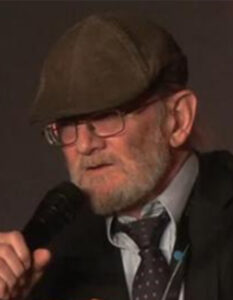 | Dennis O’Brien is a child of Sputnik and a lifelong space enthusiast. In 1984-85 he was a member of the NASA – UC Law Research Project in San Francisco, one of the first formal studies of space law. His paper – OTV: An Argument for the Independent Trader – called for orbital transfer vehicles to be owned and operated by the private sector. In 2017 he founded The Space Treaty Project, a scientific and educational nonprofit based in northern California. Since then, he has produced over three dozen articles, papers, and presentations and spoken at many international conferences, in person and online. All have focused on space law and policy, especially the changes in both national and international law that affect private activity in outer space. He currently co-chairs the Space Policy Committee of Space Renaissance International. For more information and links to articles, papers, and video presentations, please visit www.spacetreaty.org. |

Frank White | Frank White is a space philosopher, author and speaker on space exploration and the future. He coined the term "Overview Effect" in his 1987 book The Overview Effect: Space Exploration and Human Evolution, now in its third edition. He graduated magna cum laude from Harvard College (1966), where he was elected to Phi Beta Kappa, and was a Rhodes Scholar at Oxford University, earning an M.Phil. in 1969. His other books include The SETI Factor, Decision: Earth, The Ice Chronicles (with Paul Mayewski) and Space Stories, and two books written with Isaac Asimov, Think About Space and The March of the Millennia. He gave the keynote at the first Overview Effect Conference (2007) and took part in launching the Overview Institute in 2008. He is Founder and President of the Human Space Program and serves on the Futurists and Space Settlement boards of the Lifeboat Foundation. Bio & publications (PDF) |
Werner Grandl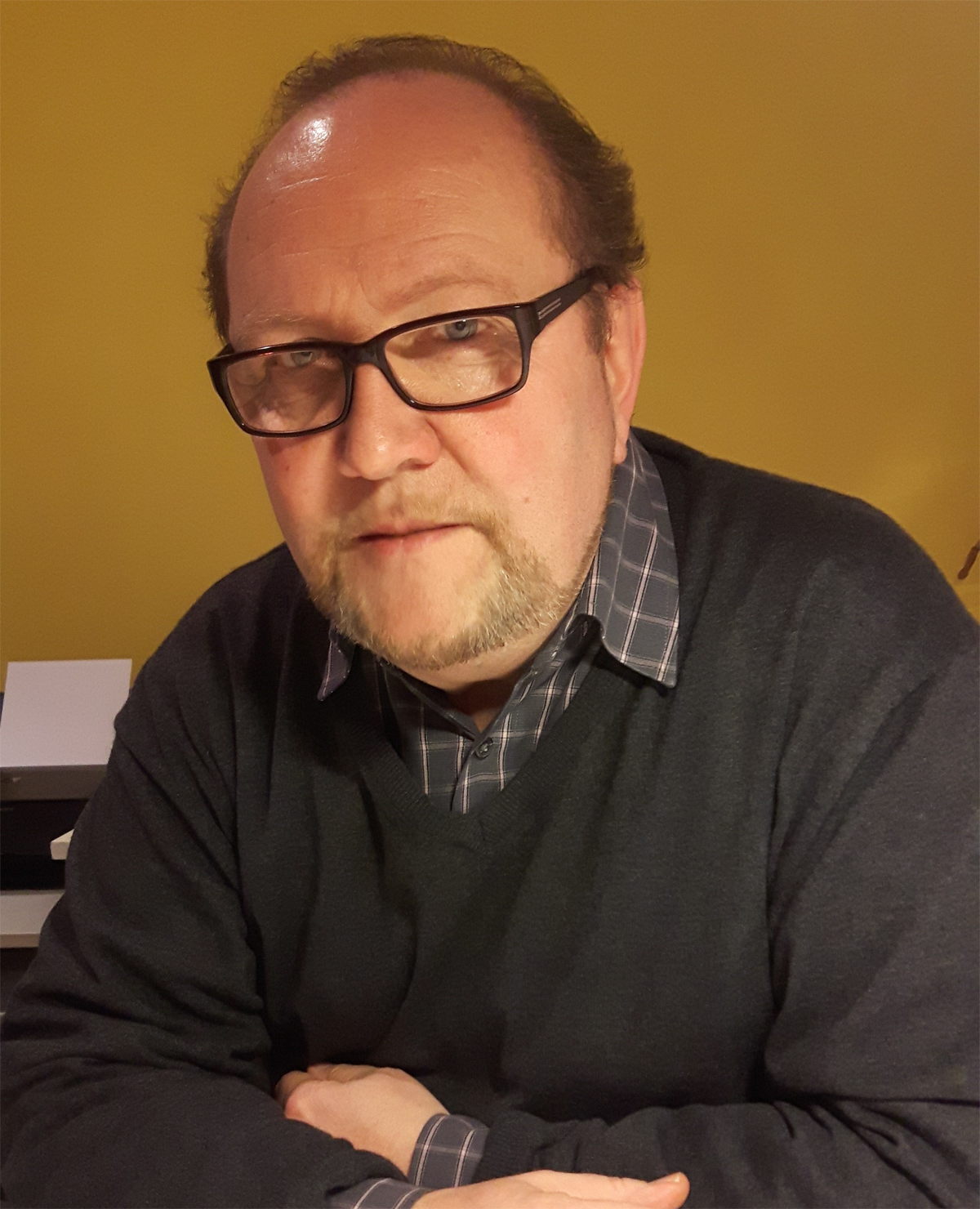 | Werner Grandl (Vienna, 1957) is an Austrian architect, civil engineer and space habitat researcher. He graduated in architecture from the Technical University of Vienna in 1984 and has been a freelance architect and consulting engineer since 1994. Since 1987 he has studied space stations, space colonies and asteroid resource utilization: his designs include the Artificial Gravity Orbital Station (AGOS), a rotating successor to the ISS, modular lunar bases, the Teleoperated Rocket Crane for lunar operations, habitats inside mined-out asteroids and a space factory at the Earth-Moon L5 point (Frontiers in Space Technologies, 2025). Other works include Astropolis – Space Colonization in the 21st Century (1993), Utopia Solis – Leben im Sonnensystem (2016) and Human Life in the Solar System (2017). SRI Director of Engineering and Applied Systems and chair of the Space Tech & Industry Committee, he is an SRI delegate to the UN Committee on the Peaceful Uses of Outer Space (COPUOS), where he presented in 2025 and 2026, co-author of the SRI position paper on the key critical factors towards 2030, and chaired the Living in Space session of the 4th Space Renaissance World Congress (2026). Bio & publications (PDF) |
Ghanim Alotaibi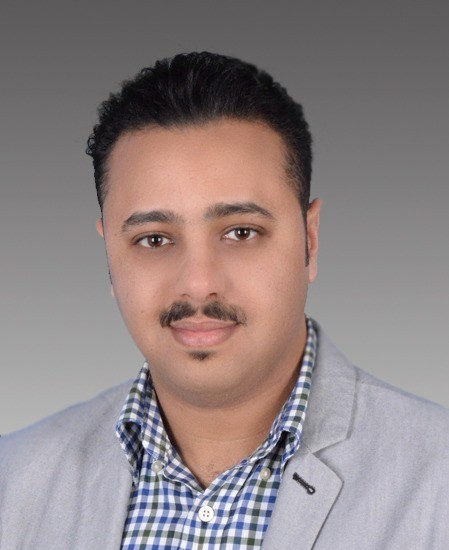 | Ghanim Alotaibi is a mechanical engineer (Kuwait University) with a master’s degree in Solar Energy Systems from Freiburg University, and a PhD candidate at the University of Strathclyde, working on the thermal management of a Space Solar Power Satellite based on the SPS-ALPHA concept. After six years at Kuwait Oil Company, he held the first full-time space job in Kuwait at Kuwait University, where he proposed and led the scientific objective of KuwaitSat-1, the country’s first satellite, launched in January 2023. He was the first analog astronaut from the Gulf countries (Mars Desert Research Station, 2019) and organized the first analog mission focused on the arts. Former Middle East Regional Coordinator of the Space Generation Advisory Council (SGAC), he is project manager of Moon Village – Participation of Emerging Space Countries (MV-PESC) and founder of the Advance Space Civilization Initiative (ASCI). He is SRI Director of Young Generations Engagement and co-chair of the Target Young Generations Committee of the Space Renaissance Academy. Bio & publications (PDF) |