Space Economy

The SRI webinar with former ESA Director General Jan Wörner

The SRI webinar with former ESA Director General Jan Wörner

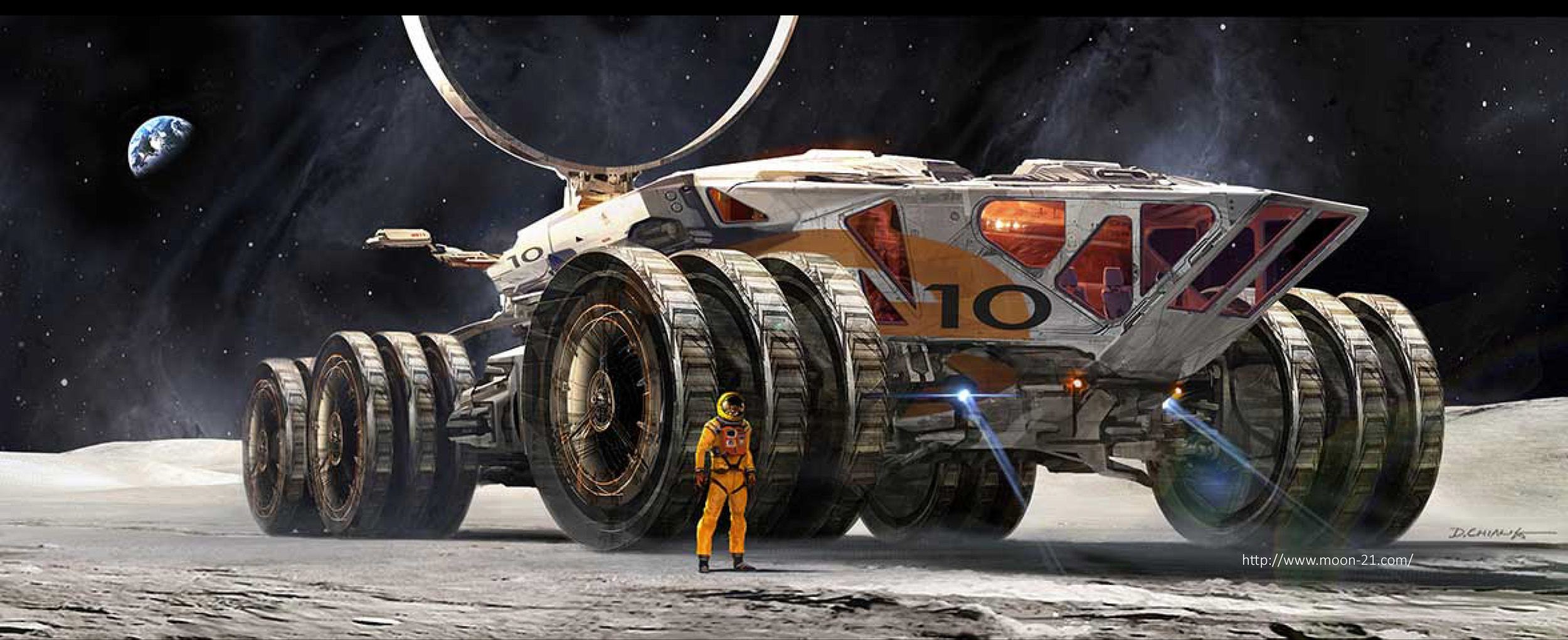
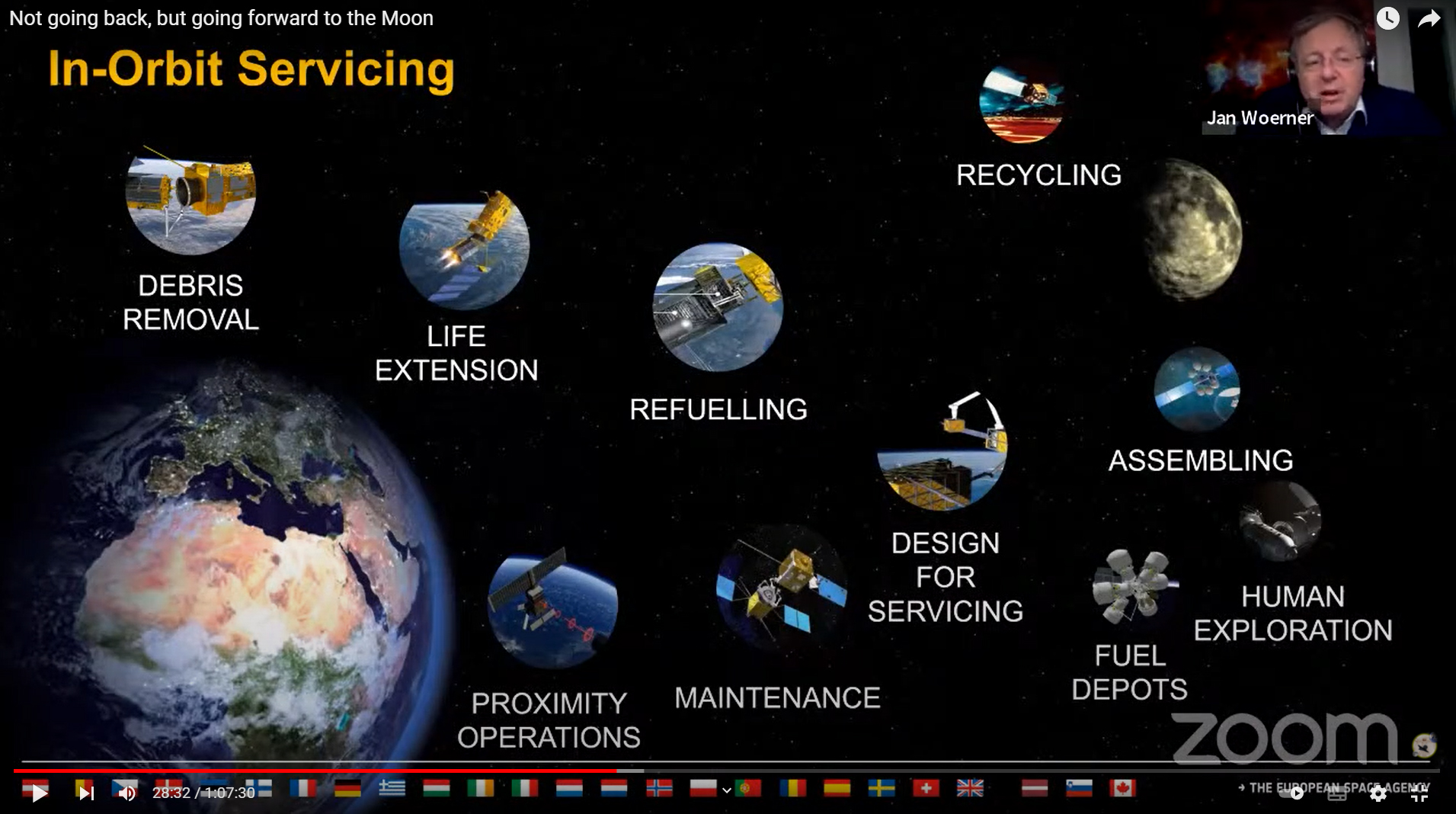
Dr. Johann Dietrich “Jan” Wörner gave a beautiful lecture a few days ago – in the frame of the Space Renaissance Academy Webinar Series, coordinated by Sabine Heinz –, illustrating his favorite concept “Not going back, but going forward to the Moon”. Btw, that was also the subject of a brief speech he gave, as one of the keynote speakers, at the SRI 3rd World Congress, end of June 2021.Dr. Wörner was the Director General of the European Space Agency since 2015 to 2021.His mandate was somehow revolutionary: while the ESA’s strategy was still focused on Telecommunication, Science and Earth Observation, he dared to put on the table the concept of a Moon Village, a permanent human outpost on the Moon, dedicated to experiment life, to explore and conduct scientific research on the Moon.

The Moon Village is one of the main topics illustrated during the lecture: the Moon is the next interesting part of the Solar System. The Moon Village is proposed as a multi-partner open project, to develop many operations on the Moon surface, human and robotic, public and private, exploration, outreach, cosmology/astronomy, transportation, communication, logistics, resources management.


Continue reading →

Posted by Adriano in Blog, News, Science & Technology, Space Economy
Civilian Space Development has kicked-off: the work starts now!

Civilian Space Development has kicked-off: the work starts now!

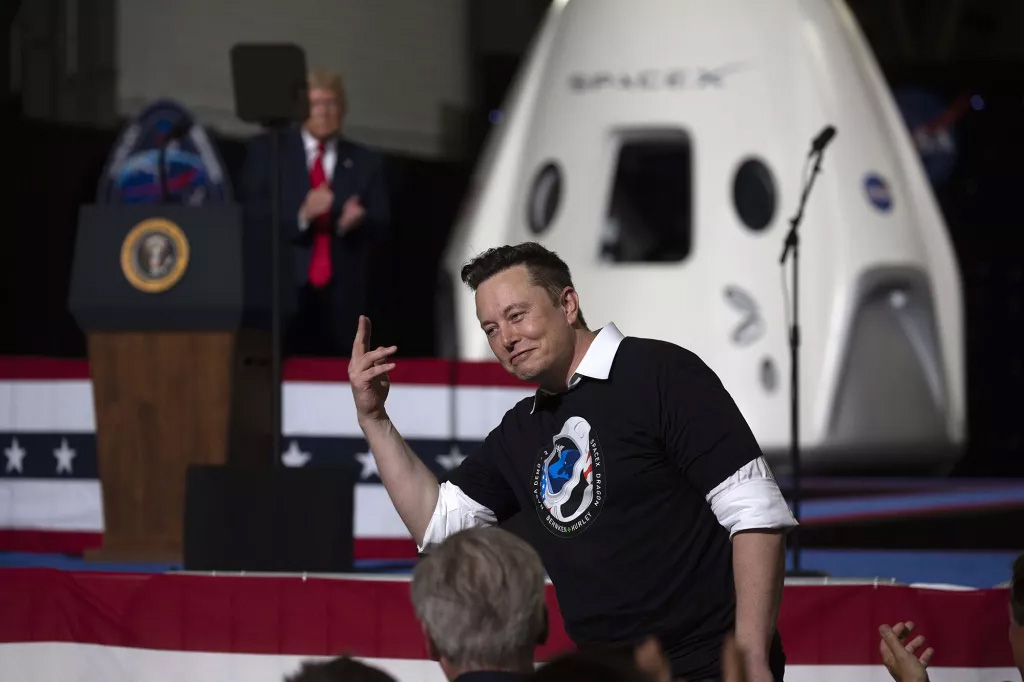
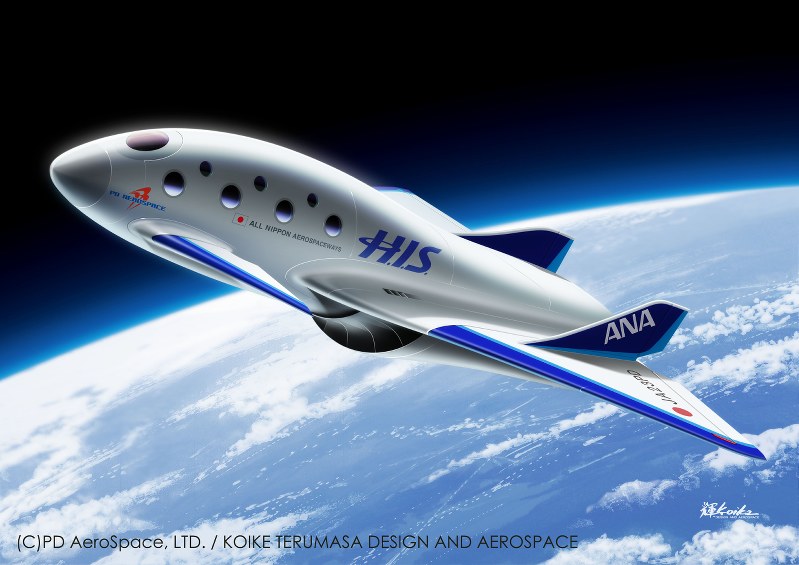
During the last months we have seen the first civilian passengers fly to space, onboard Blue Origin and Virgin Galactic vehicles. September 15th, four civilian astronauts, onboard a Space X Dragon capsule, passed the 500 km orbit, more than 100 km higher than the ISS.In 2016 we started to publicly talk about and promote Civilian Space Development, while the whole space community kept on talking only about space exploration. Earlier, in 2008, we founded the Space Renaissance movement, and a couple of years later the Space Renaissance International, as a philosophical association targeted to complete the Kopernican Revolution, supporting the Civilization expansion into space.Nowadays the concept of civilian space flight is everywhere on the media, and many people in the space community talk about a space renaissance. Of course the Coronavirus pandemics accelerated the awareness of the urgency to expand humanity into outer space. And space tourism – the first stage of civilian space settlement – is now a reality, in its first steps.

Of course nobody could be more happy than ourselves, for the above development, and of course**2  we want to congratulate with Elon, Richard and Jeff, for such a great achievement!

So, may we consider that our mission has been completed? Let’s see.

Continue reading →

Posted by Adriano in News, Newsletters, Space Economy
Mars: the gateway to the Solar System

Mars: the gateway to the Solar System

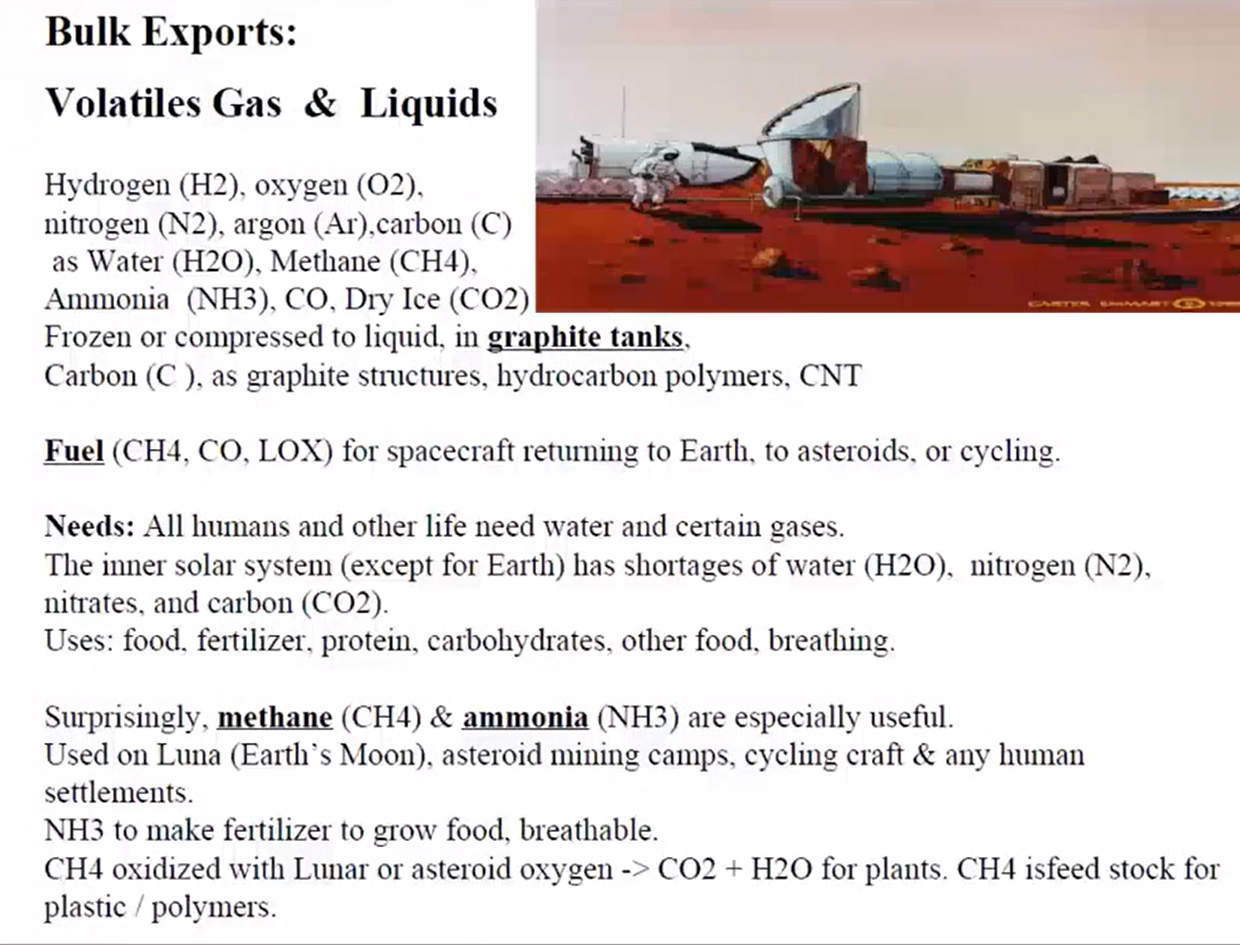
Today’s highlight: Bruce MacKenzie, founder of the Mars Foundation.Bruce gave us a detailed view of what will be the economical and industrial development in the solar system, in a broad and strategical concept: Mars, a gateway to the Solar System. How will a future trade and export take place on Mars, to facilitate the civilization expansion into the Solar System. Lot of works will focus on Phobos and Deimos, the Mars’s moons. A space elevator between Mars and Phobos will be key. Thousands of independent space settlements will allow to study and understand how ecosystems work, how water, food, wastes cycles can be better combined and integrated, and such a knowledge will have a fallout back on Earth too. Several favorable conditions suggest to start with Mars, to open the solar system to humanity and life: water, carbon, nutrients, raw materials. Trading among different space settlements is key. Mars infrastructures will include: greenhouses, manufacturing, materials processing, residential areas, ice road, desert trek, farm communities, truck stops, polymer production, fuel production. Key productions to start: polymers and fiber glass. Cargo transportation from Mars surface to the moons and orbital facilities with e.g. space elevators, magnetic guns, regolith rockets. Mars can produce finished goods, food, and bulk materials (gas, ice, liquids, fuel, fertilizers), delivered to Mars orbit, and then to other destinations. Floating towns in Venus atmosphere is another possible location for settlers communities. For a period of time, Mars will be the “bread-basket” of the Solar System.

Continue reading →

Posted by Adriano in News, Newsletters, Science & Technology, Space Economy
The Elysium effect: a Rick Tumlinson’s small paper on Space Pioneers

The Elysium effect: a Rick Tumlinson’s small paper on Space Pioneers

Space.com published a beautiful brief reflection about the new space pioneers, how they are perceived in the incoming post covid ideological climate, and how the space community should anticipate and reverse such a possible misfelt methaphysics.A summary of the contents: Opposite of Elysium’s elite, the so called Space Barons have goals of the highest order: saving the planet and opening space to future generations. Yet these visionaries are often portrayed as rich boys with fancy toys. In the incoming anti-waste mood the space revolution-naries will be seen as stereo-typical of the wealth and power that has driven the Earth to the brink of disaster.

Continue reading →

Posted by Adriano in News, Newsletters, Philosophy, Space Economy
Humanity is not forced to choose among Earth and Space, yet

Humanity is not forced to choose among Earth and Space, yet

An article published by Lori Garver in 2019 proposed to “forget new crewed missions in space” and “NASA to focus on saving Earth.”

I thought such an extreme position was worth to be discussed, and strongly refuted.

No Lori. I strongly disagree with you.

I am not a US citizen, but NASA is a Planet Earth’s primary space agency, therefore i am speaking as a Planet Earth’s citizen.

I am not against taking care of planetary issues, that basically would mean to follow the UN 2030 17 SDGs. All initiatives that NASA and other major space agencies could undertake, to mitigate global issues, such as climate extreme phenomena, pollution, plastic in the sea, fighting against pandemics, are more than welcome, and should be pursued.

I am 100% in favor of active initiatives (opposite to passive de-growthist “solutions”), e.g. to build dams to protect coastal towns, and eventually use the water surplus (coming from ice melting) to claim deserts. Proper space technologies can be used to support such kind of active initiatives.

But we must be aware that none of the planetary global issues can be solved, none of the 17 SDGs can be achieved, without adding the 18th SDG: to kick-off civilian space development.

Continue reading →

Posted by Adriano in News, Newsletters, Space Economy
The Great Objection and its Confutation

The Great Objection and its Confutation

(image: the recently discovered golden asteroid, worth $700 quintillion)

THE GREAT OBJECTION AND ITS CONFUTATION

Why we cannot solve any problems on Earth before going to space

The original version of this article was written in 2009, and reviewed by the author in May 2020

(from the old Technologies of the Frontier www.tdf.it website)

  • Before going to space, should we solve the problems here, on Earth?
  • The need for growth
  • The management of scarce resources is possible only by despotic regimes
  • The only way is space industrialization

Before going to space, should we solve the problems here, on Earth?

Whenever we speak about human presence in space to a general audience, and quite often when we talk with specialists as well, we have to hear the Great Objection: ”Before going to space, we have to solve our problems here, on the Earth”.

As soon as we reason about it we understand that the Objection is in fact a general dialectic scheme, which consists in changing the topic, pretending that the alternative is more important and urgent and so avoiding to reply to what the speaker has said. In short, it is a sort of quite-another-ism: “The problem is quite another, the cause is quite another…”.

But the Objection is Great, because too many people use it and take it for good, therefore we must face it at once and make people understand that the truth is exactly the opposite: if we don’t go to space and we don’t do it quickly, we are destined to a bad future here on the Earth. The reason is that the Earth has a finite size, to live all well we need economic growth and already now its resources are not enough, then we have to look for resources elsewhere – that is in the immense universe out there!

Continue reading →

Posted by Adriano in News, Newsletters, Philosophy, Space Economy
SRI’S PROGRAM IS NOW URGENT, IN ORDER TO END THE POST-LOCKDOWN RECESSION

SRI’S PROGRAM IS NOW URGENT, IN ORDER TO END THE POST-LOCKDOWN RECESSION

SRI’S PROGRAM IS NOW URGENT, IN ORDER TO END THE POST-LOCKDOWN RECESSION

Abstract

This article discusses the urgency to start developing reusable passenger-carrying space-vehicles. Growth is necessary for quality of life, and no more growth will be possible without free space travel. Creation of new business activities is necessary, and lack of new industries is a permanent condition in advanced societies. The article also confutes the theory that economic growth is dangerous, and should be reverted, and discusses what new industries are candidates for creating tens of millions of new jobs, without destroying jobs in existing industries. The 7th major transportation technology — space travel, based on rocket propulsion – is compared to the previous 6 ones: horse-carriages, sailing-ships, trains, propeller-driven ships, cars, trucks and buses, aircrafts. Collins brings powerful arguments to sustain the rapid development of a range of reusable passenger-carrying space-vehicles, followed by orbiting and lunar commercial and industrial infrastructures. Collins also explains why the SRI’s viewpoint has now become urgent due to the “Lockdown Recession”, arguing that even before the recent “lockdown” policies, economic growth was weak in the rich Countries. And, nowadays, the 7th transportation industry should be very attractive to governments. Collins ends by a strong confutation of the two major objections to civilian space development: 1) developing a luxury service like space travel was unnecessary and wasteful 2) de-industrialization was necessary to reduce humans’ environmental impact; and the clear indication that the development of space travel services should receive at least 1/1,000 of the budget that “green” policies receive, or about 1% of what space agencies receive for their activities. A severe judgment is then pronounced on those who advocate ending economic growth due to the “dwindling resources” of Earth: they are like a small child who still believes that the house where they live is the whole world. Continue reading →

Posted by Adriano in News, Newsletters, Philosophy, Space Economy
THE LUNAR EXPLOITATION INDUSTRY COULD TAKE OFF WITH SOME MORE GOVERNMENT SUPPORT

THE LUNAR EXPLOITATION INDUSTRY COULD TAKE OFF WITH SOME MORE GOVERNMENT SUPPORT

THE LUNAR EXPLOITATION INDUSTRY COULD TAKE OFF WITH SOME MORE GOVERNMENT SUPPORT 

by Giulio Prisco

In my last SpaceNews Op-Ed I argued that we should build a sustainable presence on the Moon before moving on to Mars and beyond.

I stated that promising business cases for returning to and start exploiting the Moon, with reasonable funding and reasonable expectations of return, are beginning to appear. Some readers criticized me for stating this without supporting evidence (I just linked to Paul Spudis’ 2016 book). They also noted that, were this the case, space companies should be rushing to the Moon with their own money, without government support.

There is, however, a big difference between the “promising business cases are beginning to appear” and “solid business cases exist” phases. In the first phase, a few venture capitalists start investing, but most large investors stay behind to see what happens. The exploitation of lunar resources is still in the first phase, and I think public funding is still needed to bootstrap the industry.

Therefore, I think governments (and in particular the U.S. government) should continue to lead the way, in partnership with private industry, and encourage commercial partners to assume leadership when the time is right. Continue reading →

Posted by Adriano in News, Newsletters, Space Economy, United States