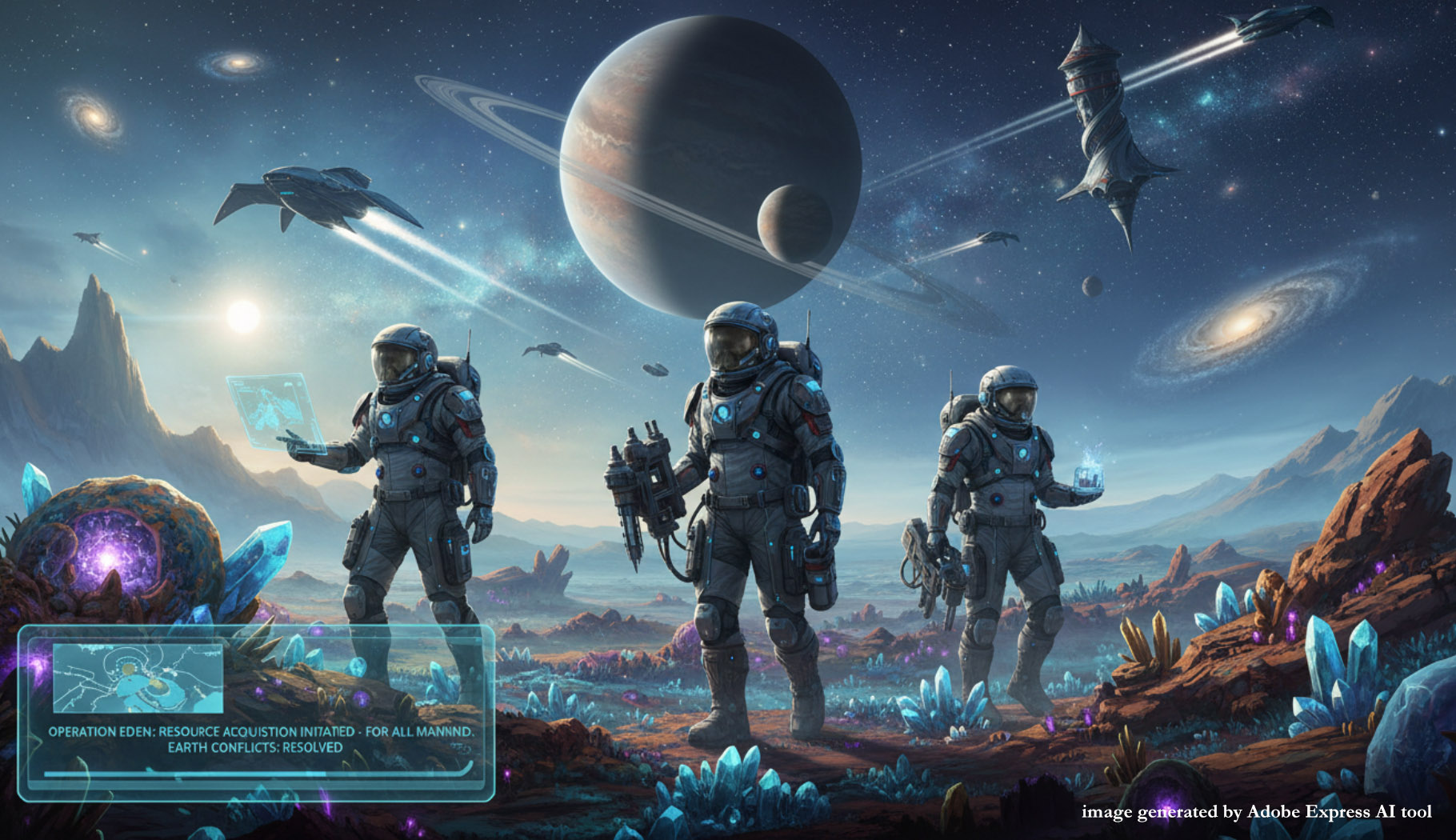

As the geopolitical climate shifts, we increasingly hear warmongering pronouncements that tend to resurrect popular sentiments we naïvely believed had been buried by history.Among these is the claim that Europe is weak and cowardly, unwilling to cross the threshold between adolescence and adulthood. Maturity, according to this narrative, demands rearmament and a head-on confrontation with the challenges of the present historical moment. Yet beneath this rhetoric lies a far more troubling transformation.
We are witnessing a blatant attempt to replace the prevailing moral framework—until recently ecumenically oriented toward a passive and often regressive environmentalism—with a value system founded on belligerence. This new morality defines itself against “enemies” of presumed interests, whether national, ethnic, or ideological.
Those who expected a different kind of shift—one that would abandon regressive policies in favor of an active, forward-looking environmentalism—have been rudely awakened. The self-proclaimed revolutionaries sing an old and worn-out song: war. These new “futurists” embrace a technocratic faith that goes far beyond a legitimate trust in science and technology—long maligned during the previous ideological era—and descends into open contempt for human beings themselves, now portrayed as redundant or even burdensome in the age of the supposedly unstoppable rise of artificial intelligence.
What we face is a dramatic ethical and cultural regression, from which some expect to profit greatly.
Why is this a cultural regression? Because it reintroduces fierce intraspecific competition as the proposed solution to our civilization’s challenges—or worse, without any concern for global challenges at all. The rearmament policies now spreading across the world almost entirely ignore environmental considerations, which until less than a year ago were presented as the dominant justification for largely regressive degrowth policies.
Why is this also an ethical regression? Because ethics, as lived and understood by societies, is neither fixed nor immutable. While profound ethical insights can indeed be found among ancient philosophers, humanity’s moral judgments regarding murder, massacre, genocide, exploitation, torture, ethnic cleansing, and war itself have undeniably evolved over centuries and millennia. Technological and social progress have steadily reduced the objective necessity of ruthless competition, opening the possibility of a world in which losers need not perish, but may still benefit from collective advancement—and perhaps find future opportunities for success.
Even within sacred traditions, this evolution is visible: from biblical narratives that recount massacres, divine favoritism toward specific ethnic groups, and concepts of women as property, to the evangelical message, which introduces a far more humanist vision—one that still resonates deeply today.
From both cultural and ethical perspectives—two dimensions that should never diverge—the realization, around the middle of the twentieth century, that humanity was consuming more resources than Earth could provide was itself a positive step forward. The responses to that realization, however, have been deeply flawed. Passive environmentalism and degrowth policies have paved the way for today’s grim prospect: the annihilation of much of humanity in a global war of all against all.
But here lies the central point.
Until little more than a century ago, space technologies did not exist. Human competition was confined within planetary boundaries, and the stakes were the control of Earth’s resources. Did this reality make war acceptable—or even virtuous? For centuries, poets and historians glorified heroes and conquests, embedding war deeply within educational systems that still emphasize victories, battles, and the demonization of the defeated.
Yet once humanity began to imagine expansion beyond Earth—and the possibility of accessing extraterrestrial resources—a different sensibility emerged. From the artistic movements of the twentieth century to the global upheaval symbolized by 1968, war increasingly came to be seen for what it truly is: an immense waste of lives and resources, an intolerable deviation from the path of civilized progress, and—almost always—a violent appropriation of land and wealth. An ethical and cultural wound that has become unbearable, especially now that a viable alternative exists.
Today, at the beginning of the second quarter of the twenty-first century, space technology—now closely and inextricably linked to the development of artificial intelligence—is on the verge of a true quantum leap. It is paving the way for the civilian development of space, beginning with the Moon and the cislunar domain.
It would seem logical to concentrate our collective efforts on this extraordinary goal. Humanity appears to stand at the threshold of a potential golden age, one in which all people—nations, cultures, ethnic communities, and peoples of Planet Earth—can contribute and share in the benefits. The resources of the solar system and the vast spaces available for industrial and residential development are so abundant that they naturally reduce greed and brutality, encouraging cooperation and fair competition instead. The development of global communication has progressively shown that all people of the world are really very similar in their daily life, hopes, concerns, projects, love for their children, struggle to get better life conditions… not easy for the warmongers to force Terrestrians to see monsters in foreign countries, and hate each other. We may be approaching a new romanticism: one in which looking down on Earth from orbit, and outward into the universe from the Moon and beyond, evokes a profound sense of shared destiny—what Frank White so aptly described as the “overview effect.”
This is not fantasy. It is a path of evolution firmly grounded in centuries of technological, cultural, and moral progress.
And yet, some of those to whom we have entrusted—by vote—the responsibility of leading our nations seem to believe that we must instead relish the prospect of death and destruction, and devote absurd quantities of public resources to this insanity.
In this surreal narrative, those who refuse rearmament are branded as weak and cowardly. In reality, the opposite is true. In today’s world, with the immense potential now within reach, it is precisely the weak and the fearful who turn to war. The brave and the generous do not resign themselves to killing their brothers over dwindling planetary resources. They aim higher. They look beyond Earth, toward new frontiers and new resources for all.
I am convinced that many of us—explorers and pioneers—already exist. What remains is for us to step forward and to begin replacing unsuitable political directions with others that are culturally sound, ethically mature, and worthy of humanity’s future.
The “Space for Peace” concept is at the core of the SRI IV World Congress preparation: “Quality of Life, on Earth and Beyond”. The Congress will take place, virtually, from 30 June to 4 July 2026. Some of the key tracks:
- Status of civilization and quality of life
- Civilian Space Development, a factor of Peace on Earth and Beyond
- Space resources: who are the owners? We speak for Space Settlers!
- Human rights in space
- The permanent space revolution: 100% inclusivity
- Protection of life and health in space
- Beauty and ergonomics of habitats as an essential life requirement
- Space to Space transport vehicles
- Orbital Debris recovery and reuse
- Cloud computing and big data centers in space
- Producing fuel in space
Check the Call for Papers, and submit your abstract(s)!
Register here.
To understand more about the Congress symposia, sessions, and proposed topics, also watch the SRIC4 #00: “Announcing the 4th SRI World Congress”, on the Space Renaissance YouTube channel!
Let’s work together to make a great congress!
Watch and subscribe to the Space Renaissance YouTube channel.
Also download a pdf copy of this article.






















 Space Renaissance France (French Chapter of SRI)
  Space Renaissance USA, Inc. (USA Chapter of SRI)
 Space Renaissance (Italian Chapter of SRI)
 Space Renaissance India (Indian Chapter of SRI)
 African Space Renaissance (African Chapter of SRI)
 Space Renaissance Academy
 Space Renaissance Initiative Group