Blog

SRIC4 closed, the 4th of July 2026 – the Final Resolution

SRIC4 The Quality of Life on Earth and Beyond

SRIC4 closed, the 4th of July 2026 – the Final Resolution

by Dr. Gülin Dede

Dear Space Renaissance Community,

The 4th SRI World Congress “Quality of Life, on Earth and Beyond” has come to a close after five remarkable days, from June 30th to July 4th, 2026. On behalf of Space Renaissance International, I want to thank every member, speaker, participant and supporter who joined us, whether live or online.
We are proud to report that quorum was reached and surpassed on all three items put before the Congress: the Thesis, the Final Resolution, and the selection of our new Board of Directors. 56% of those having the right to vote have cast their vote as of 14 July 2026.

The New Board of Directors

  • President and Board Chair: Bernard Foing
  • Founder and President Emeritus: Adriano V. Autino
  • Executive Director: Gülin Dede
  • Director of SR Academy: tbd
  • Director of Institutional Strategy and Partnerships: Gülin Dede
  • Director of Policy and Legal Affairs: Dennis O’Brien
  • Director of Engineering and Applied Systems: Werner Grandl
  • Director of Gerard K. O’Neill Heritage Development: Jerry Stone
  • Director of Culture and Civilizational Futures: Adriano V. Autino
  • Director of Intercultural Integration: Alberto Cavallo
  • Director of Young Generations Engagement: Ghanim Alotaibi
  • Director of Space Renaissance Ambassadors: Bernard Foing
  • Director of Space Philosophy and History: Marie-Luise Heuser
  • Director of Nominations and Awards: Jerry Stone
  • Treasurer / Finance Oversight: Adriano V. Autino

We congratulate our newly elected directors, and we thank the outgoing Board for their five years of dedicated service since the 3rd Congress in 2021.

The SRIC4 Final Resolution
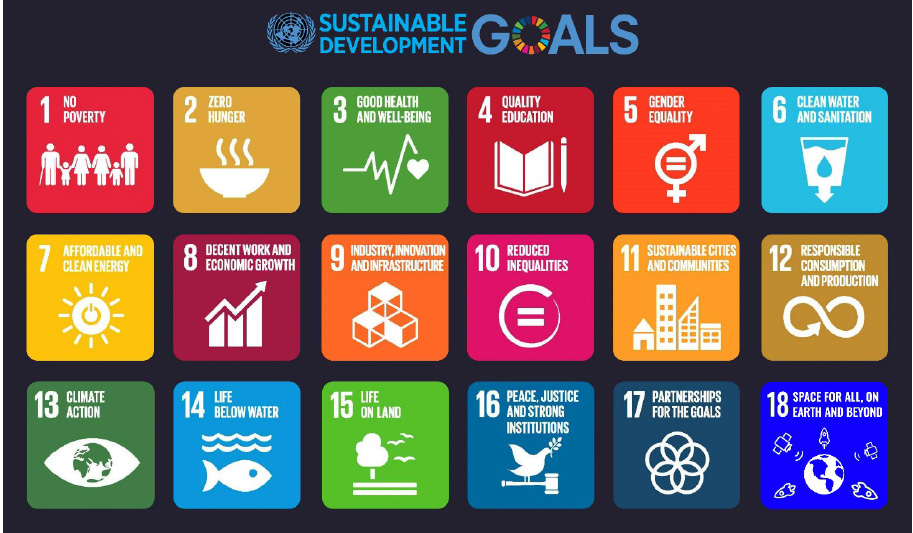
The Congress adopted a Final Resolution setting out our priorities for the next five years. It calls for an international ban on space weapons, the conversion of military-industrial capacity toward civilian space development, the promotion of the Space 18th Sustainable Development Goal, greater investment in life and health protection in space, the establishment of the first permanent lunar villages, and fourteen further priorities spanning space habitats, in-space resources, reusable transport, space-based solar power, and space art and culture.

See the full text of the Final Resolution, along with the detailed Acta of the Congress. All the Congress’ materials are available here.

You can also revisit any of the five days of the Congress on our YouTube channel:

SRI’s Next Chapter
The new Board will begin translating this Resolution into concrete programs and initiatives over the coming weeks. We will keep you updated on the organizational steps, areas of responsibility and opportunities for members to contribute. Particular attention will be given to strengthening our committees, partnerships, communications, publications, educational activities and programme-development capacity.

SRI’s greatest resource remains its community. We therefore invite every member to remain actively involved, bring forward ideas and help transform the momentum generated by SRIC4 into meaningful and lasting action.

Thank you again for being part of this milestone.

Long live the Space Renaissance!

Warm regards,
Dr. Gülin Dede
Executive Director
Space Renaissance International

ATTENTION PLEASE!!! All the new SRI Members registered during the year of 4th Congress will get a special edition membership card! Join SRI now!

https://spacerenaissance.space/membership/international-membership-registration/

Posted by Adriano in Blog, Newsletters, SRI IV WORLD CONGRESS
SRIC4 Day 4: From Reusable Launchers to Space Habitats, Interstellar Travel and Art Beyond Earth

SRIC4 Day 4: From Reusable Launchers to Space Habitats, Interstellar Travel and Art Beyond Earth

by Enes Beşli

The fourth day of Space Renaissance International’s Fourth World Congress examined the technologies, infrastructure, health systems and cultural initiatives needed to transform space from a destination for short missions into a place where civilian communities could live, travel and create.

3 July 2026 — The Fourth Space Renaissance International World Congress continued on Friday with a wide-ranging programme focused on space technology, transportation, industry, human safety and the cultural use of outer space.

Day 4 brought together engineers, researchers, advocates and artists to explore subjects ranging from reusable launch systems and space elevators to rotating habitats, nuclear propulsion, lunar launch infrastructure, radiation protection and space art.

The day’s discussions reflected a common theme: becoming a spacefaring civilization will require an integrated system of transportation, construction, energy, health protection and culture. Participants argued that no individual technology will be sufficient. Civilian expansion will depend on how these systems are connected and made safe, sustainable and accessible.

Engineering the Foundations of Life in Free Space

The principal technology session was chaired by Werner Grandl and moderated by Alberto Cavallo.

Grandl opened the technical programme with an examination of the scientific and engineering requirements for living in free space.

His presentation covered artificial gravity, the construction of rotating habitats, in-situ resource utilisation, radiation shielding, protection against micrometeoroids and the creation of artificial biospheres.

Grandl argued that the ability to maintain long-term human health will influence the dimensions and architecture of future habitats. Although partial gravity may be sufficient during early experimentation, he suggested that environments approximating Earth-normal gravity may ultimately be required for permanent civilian communities.

The presentation also highlighted the importance of constructing large structures using materials obtained in space. Transporting every component from Earth would impose significant cost and logistical constraints, making extraterrestrial resources and orbital manufacturing central to long-term settlement.

The discussion established a framework that connected many of the day’s later contributions: safe human settlement will require artificial gravity, radiation protection, sustainable life-support systems and large-scale construction capabilities.

Reusable Launchers and the Transformation of Space Access

As moderator of the session, Alberto Cavallo also presented an overview of the development of reusable launch systems.

He examined the increasing launch activity of the United States and China and discussed the growing influence of commercial operators, particularly SpaceX, on global access to orbit.

Cavallo reviewed systems including Falcon 9, Blue Origin’s New Glenn and Rocket Lab’s Electron programme. He contrasted emerging reusable systems with more traditional expendable or partially reusable government programmes and questioned whether high-cost launch architectures can remain economically competitive.

The presentation argued that reusability is essential to reducing transportation costs and increasing launch frequency. However, reusable rockets were presented as one stage in a broader evolution rather than a complete solution to civilian space transportation.

For large-scale settlement to become possible, space transportation will eventually need to develop the reliability, safety, frequency and passenger orientation associated with mature terrestrial transport industries.

Space Elevators as Sustainable Transportation Infrastructure

Peter Swan presented the space elevator as a potential alternative or complement to rocket-based access to orbit.

He argued that conventional launch vehicles devote most of their initial mass to propellant and vehicle systems, while only a limited proportion reaches orbit as usable payload. A space elevator, by contrast, could move significantly larger quantities of cargo while requiring less propellant.

Swan described a Galactic Harbour architecture involving two major tether systems. Such infrastructure could support high-volume transportation, space-based solar power, planetary defence and construction throughout the Earth–Moon system.

The presentation also addressed risks from orbital debris and collisions. Swan noted that tethered systems have previously operated in orbit and argued that future elevators would require continuous monitoring, manoeuvring capability and integrated space-traffic-management procedures.

The space elevator was presented not merely as a transportation device, but as infrastructure capable of enabling an industrial economy beyond Earth.

Space Tourism as a Driver of Civilian Industry

Patrick Collins examined the economic and social role of space tourism.

He argued that the aerospace sector has historically depended heavily on government and military expenditure. Space tourism could help redirect the industry towards civilian passengers and commercially sustainable transportation services.

Collins compared the possible development of spaceflight with earlier revolutions in rail, maritime and air transportation. In each case, expanding passenger demand supported infrastructure, reduced costs and created industries extending far beyond the original transport service.

Space tourism was therefore framed as more than a leisure market. It could stimulate the production of safer vehicles, passenger facilities, accommodation, training services and orbital destinations.

Collins argued that a large civilian transportation economy could eventually grow into a major global industry and provide a peaceful alternative use for industrial and technological capacity currently directed towards military activity.

Advancing the Space-Elevator Roadmap

Dennis Wright presented the work of the International Space Elevator Consortium.

He reviewed the organization’s efforts over approximately two decades to advance research, education and public understanding concerning space-elevator systems.

The presentation addressed developments in carbon nanotubes, graphene and other high-strength materials. Wright explained that many individual components of a space elevator could already be engineered, while the production of a sufficiently strong and continuous tether remains one of the principal challenges.

He also discussed collision avoidance, risk assessment, tether dynamics and counterweight design.

Wright emphasized the role of knowledge curation and interdisciplinary coordination. Space elevators require expertise in materials science, orbital dynamics, transportation engineering, safety, policy and economics, making sustained cooperation among different research communities essential.

Space-Based Solar Power and the O’Neill Vision

Ghanim Alotaibi discussed space-based solar-power systems and their relationship to the space-settlement vision developed by Gerard K. O’Neill.

He compared current commercial proposals with O’Neill’s broader concept, in which solar-power satellites would form part of an industrial system supporting permanent settlements.

The presentation argued that scaling space-based solar power through materials launched entirely from Earth would be difficult. Lunar resources could eventually supply structural and industrial materials, allowing solar-power infrastructure to expand without an equivalent increase in launches from Earth.

This approach would connect energy generation, lunar resource use, orbital manufacturing and settlement development within a single economic system.

Space Cruisers for Cislunar and Interplanetary Travel

Werner Grandl later presented concepts for large spacecraft intended for travel within cislunar space and towards Mars.

The proposed vehicles would be assembled in low Earth orbit through modular construction rather than launched as complete systems from Earth.

Nuclear thermal propulsion was examined as an option because of its higher specific impulse compared with conventional chemical propulsion. The discussion also addressed technical concerns, including long-term hydrogen storage and propellant boil-off.

Walter Putnam contributed to the propulsion discussion, explaining the rationale for selecting nuclear thermal propulsion and considering whether advanced coatings, including graphene-based materials, could help address storage and thermal-management challenges.

The presentations reflected a shift away from mission-specific vehicles towards reusable space cruisers capable of supporting repeated journeys.

Looking Beyond the Solar System

Giancarlo Genta addressed the long-term possibility of interstellar travel.

He presented a concept for a large starship capable of transporting a substantial population to another stellar system over several centuries. Such a vessel would need to function as a self-contained community rather than a conventional spacecraft.

The presentation examined the mass, propulsion and population requirements of a generation ship and considered whether humanity could begin expanding beyond the Solar System within the coming centuries.

Niklas Järvstråt continued the interstellar theme by comparing possible strategies for long-term expansion through the galaxy.

He discussed routes directed towards the galactic centre and alternatives following the Orion Arm. Rather than minimising only average travel distance, he argued that route planning should reduce the most difficult individual stages of expansion.

His contribution addressed population growth, recycling, shielding, industrial capacity and communication delays between distant settlements.

Järvstråt also proposed the creation of a terrestrial generation-ship simulation in Sweden. The project would use a closed-loop environment incorporating habitation, agriculture, mining and manufacturing to test whether a small community could sustain itself over extended periods.

Launching Cargo from the Moon

Margarita Safanova examined the use of electromagnetic railgun systems for launching payloads from the lunar surface.

The Moon’s lower gravity and lack of a substantial atmosphere could allow cargo to be accelerated without the aerodynamic and energy constraints affecting similar systems on Earth.

The presentation considered how lunar launch systems could transport materials to orbit or other locations in cislunar space.

The discussion also addressed the need to circularize payload trajectories after launch. Safanova proposed further collaboration on strategies for orbital insertion and on a broader comparison of methods for leaving planetary surfaces.

Such a comparative study could assess rockets, mass drivers, railguns, elevators and other transportation concepts according to their energy requirements, payload capacity, safety and infrastructure needs.

A Proposed High-Thrust Electric Propulsion Concept

Gregory Harrison presented a proposed electric propulsion concept referred to as the H-drive.

The system was described as using sequenced electrical interactions and Coulomb forces to generate propulsion. Harrison presented highly ambitious theoretical performance estimates and outlined plans for a prototype operating with controlled electrode sequences.

Participants asked questions about the proposed physical mechanism, interaction with surrounding matter and the distinction between the concept and conventional reaction-mass propulsion.

As the technology remains at the prototype and theoretical stage, the performance claims discussed during the presentation require experimental validation and independent scientific assessment.

Making Human Risk Central to Exploration Architecture

The following session turned towards radiation protection and human safety.

Alessandro Bartoloni presented a strategic approach to space-radiation protection, arguing that research remains fragmented across separate disciplines and institutions.

He proposed a more integrated agenda encompassing:

  • Moon-to-Mars radiation infrastructure;
  • translational space radiobiology;
  • validated digital human twins;
  • autonomous monitoring and warning systems; and
  • common standards for assessing exposure and health risk.

Bartoloni traced a complete protection pipeline beginning with galactic cosmic rays and solar-particle events, continuing through radiation transport and biological effects, and ending with operational decisions for crews and habitats.

Digital human twins could eventually combine environmental measurements with individual health data to support mission planning and real-time responses.

The central argument was that human-risk assessment should not be added after vehicles and habitats have already been designed. It should instead serve as an organising principle of exploration architecture from the beginning.

Artificial Magnetospheres and Planetary Protection

Jim Green discussed the possibility of creating an artificial magnetic field to protect Mars.

Mars lacks the strong global magnetosphere that protects Earth from solar particles and helps preserve its atmosphere. A sufficiently large artificial field could potentially reduce atmospheric loss and form part of a very long-term strategy for planetary protection or environmental transformation.

The proposal illustrated the scale of engineering that may eventually be considered for permanent planetary settlement.

It also reinforced the distinction between protecting individual astronauts and protecting entire inhabited environments. Long-term settlement may require defensive infrastructure operating at habitat, regional or even planetary scale.

Towards an Independent Space Safety Institute

Tommaso Sgobba addressed the need for stronger safety certification within the commercial space sector.

Although connectivity problems prevented parts of the presentation from being delivered as intended, the discussion introduced a proposal for an independent Space Safety Institute.

Such an organization could perform applied research, establish standards and provide certification services, functioning in a manner comparable to classification and safety bodies in aviation, maritime transport and other mature industries.

The proposal reflected the growing diversity of commercial space activities. As more private vehicles, habitats and services become operational, safety oversight cannot depend exclusively on mission-specific government procedures.

Participants discussed radiation protection, active magnetic shielding and the need for standards addressing the health and safety of civilians as well as professional astronauts.

Culture as Part of Space Settlement

The final major section of Day 4 shifted from engineering and health to the cultural utilisation of outer space.

The Space Renaissance 4 All Gallery & Culture Beyond Earth session was introduced and chaired by Bernard Foing.

Cheryl Gallagher, Minister of Culture of Asgardia and an SRI member, opened the cultural discussion with an examination of current trends in space art and the increasing use of artificial intelligence in creative practice.

She argued that AI should serve as a collaborative tool rather than replace human artistic intention. Responsible use will require transparency concerning how works are created, respect for artists’ contributions and continued emphasis on human imagination.

Gallagher also discussed her experience in sending artwork beyond Earth and expressed interest in future collaborations connecting art, science and space exploration.

Habitats as Cultural Environments

Guy Pignolet connected space-habitat development with the cultural history of human communities through his paper “Cooking-up APAS Cakes for a Peaceful Development of Space Habitat.”

As Pignolet reminded us through the Apollo–Soyuz example, space has already shown that former adversaries can meet, dock, cooperate and build together. The 1975 Apollo–Soyuz encounter, enabled by Vladimir Syromiatnikov’s APAS docking system, became a powerful symbol of peaceful cooperation beyond political division. His contribution drew attention to the role of food, cooking and shared practices in social development. These elements help transform an engineered shelter into a lived environment with identity and meaning.

The discussion suggested that future habitats must provide more than air, water and radiation shielding. Communities also require rituals, creativity, shared spaces and opportunities for cultural expression. This perspective linked the art session to the earlier engineering discussions. Technical habitability makes survival possible, but cultural life makes a settlement socially sustainable.

Developing the Space Renaissance for All Art Gallery

Bernard Foing presented an overview of the Space Renaissance for All Art Gallery and related projects developed over approximately two decades.

The initiatives have connected artists, educational institutions and space organisations through exhibitions, events and artworks sent beyond Earth.

Foing also discussed the Moon Gallery project and plans to display space-related art at future international events.

Dr. Gülin Dede presented “From Orbit to Exhibition: Developing the Space Renaissance for All Art Gallery as an Art Media and Outreach Platform.”

Speaking from the perspective of the SRI Art and Media Lab, she examined how the gallery could evolve from a collection of individual projects into a more coherent curatorial and public-engagement programme.

Recommendations included:

  • developing thematic curatorial sequences;
  • strengthening partnerships with museums and cultural institutions;
  • improving documentation and interpretation;
  • involving artists from different cultural backgrounds;
  • establishing meaningful collaboration with Indigenous artists; and
  • connecting exhibitions with education and public outreach.

The presentation positioned art as a way to communicate the social, cultural and human meaning of space development to wider audiences.

In the discussion, Aziz Alareedh also referred to archaeological and cultural artefacts from Kuwait that had been sent into space, underlining that human expansion beyond Earth can carry the histories and traditions of many societies rather than separating itself from Earth.

Gallagher also discussed opportunities to present the Space Renaissance gallery at forthcoming conferences and cultural venues, as well as future concepts including additional art missions and an “Art to Mars” initiative.

Technology and Culture Must Develop Together

Day 4 of SRI4C demonstrated the scale and diversity of the systems required for civilian life beyond Earth.

Reusable launchers may reduce the cost of initial access, while space elevators, lunar launch infrastructure and reusable cruisers could support higher transportation volumes. Orbital manufacturing and extraterrestrial resources may enable large habitats and energy systems that cannot be supplied solely from Earth.

At the same time, advances in transport and construction will have limited value unless human beings can live safely within the resulting environments. Radiation protection, artificial gravity, health monitoring, certification and independent safety standards must therefore develop alongside propulsion and infrastructure.

The cultural session added another layer to discussions. Permanent settlements will require art, heritage, shared practices and public narratives as much as engineering.

The main conclusion emerging from Day 4 was that a spacefaring civilization cannot be built through technology alone. It must combine engineering capability with human safety, economic access and cultural meaning.

See the recorded videos of SRIC4:

Follow the Congress last day, in less than two hours!

Here are the links to the YouTube livestream for each day: https://spacerenaissance.space/event/the-sri-4th-world-congress-30-june-4-july-2026/

ATTENTION PLEASE!!! All the new SRI Members registered during the Congress will get a special edition membership card! Join SRI now!

https://spacerenaissance.space/membership/international-membership-registration/

Posted by Adriano in Articles, Blog, Events, Newsletters, SRI IV WORLD CONGRESS
SRIC4 Day 3: Living in Space, Space Habitats, 18th SDG, Young Generations and Sci-Fi Future Narration

SRIC4 Day 3: Living in Space, Space Habitats, 18th SDG, Young Generations and Sci-Fi Future Narration

by Adriano V. Autino

This was the third day of the Space and NASA’s International Support for Congress, with multiple panel sessions and presentations. The meeting began with Robert Katz welcoming attendees to Day 3 on July 2, 2026. 

The Living in Space Session

The session began with Adriano Autino presenting on the importance of simulated gravity for long-term space habitation, emphasizing the need for 1G environments to support human health, well-being, and freedom of bi-directional migration and tourism. Brooke Mills then discussed her company’s development of technology to profile radiation degradation in pharmaceuticals for long-duration space missions, presenting their HERO Lab payload design. Colin Lennox presented on reintroducing wetlands into habitat systems as a natural solution for environmental needs, avoiding high-energy requirements for processing. David Brody discussed bioethical and socio-political frameworks for child-rearing in space, highlighting challenges such as gravity, radiation, and the ethical considerations of reproducing off-planet. Joseph Pelton explored the concept of terraforming Mars and the Moon, focusing on the challenges of creating artificial magnetic fields to retain atmospheres and the massive amounts of mass required for atmospheric generation. Peter Swan discussed the modern space elevator concept, explaining how graphene-based materials could enable a 100,000 kilometer tether system that would deliver 170,000 tons of mass annually to space with 70% efficiency, allowing routine Mars missions and assembly at the geosynchronous anchor point. Dr. Susan Jewell addressed neurological and neurobehavioral health challenges in space, proposing policy recommendations including behavioral health monitoring standards and human-centered AI governance, and outlined plans to test AI integration in upcoming analog missions. Madhu Thangavelu discussed the potential for commercially sustainable space missions using the International Space Station as a staging point for lunar exploration, proposing a 14-day mission profile using existing SpaceX technology. Dr. Claire Nelson introduced the concept of Lunaria, a citizen-owned lunar conservancy cooperative that would enable 150 people to live permanently on the Moon by 2050, focusing on research, heritage preservation, and collaborative governance rather than competing national interests. Mike Helton presented a solution for managing dangerous asteroid orbits using artificial intelligence robots and thruster systems that could gradually move asteroids out of Earth’s vicinity into the asteroid belt, requiring minimal budget and involving a phased approach from human crews to fully autonomous robotic systems. Joe Pelton closed the session, recalling the publication of a book collecting several article written by some of the partners of the Living in Space initiative, carried on by ACES Worldwide and SRI since 2 years.

The Space Habitats Session

Jerry Stone presented a comprehensive history of space station and habitat design concepts, tracing ideas from early 20th century proposals by Hermann Nudnung and Arthur C. Clarke to modern concepts like Gerard O’Neill’s large-scale space habitats. He discussed the challenges of planetary surfaces for long-term human habitation, particularly the issues with gravity on the moon and Mars, and proposed a small scale O’Neill habitat demonstrator called Island Zero, which would provide simulated gravity through rotation while being more cost-effective, for an initial experimentation. Jerry Stone also presented his Island Zero project, which proposes a space habitat designed for medical research on different gravity levels, with potential for income generation through leasing modules to commercial organizations. Bernard Foing and his team demonstrated their exospacer habitat, which has been used in various locations for astronaut training and lunar mission simulation, including testing rovers and conducting scientific experiments. Silvia Schmalzl presented a compelling argument for incorporating living systems, particularly moss, into space infrastructure to support long-term human habitation beyond Earth. She emphasized that current space habitats rely heavily on mechanical systems with limited biological redundancy, arguing that pioneer organisms like moss could serve as “biological hardware” for life support, psychological well-being, and creating habitable environments that feel like homes rather than machines. Joe was scheduled to present on rotating LEEO resorts but experienced technical difficulties with screen sharing, preventing him from delivering his planned discussion about artificial gravity requirements for multi-planetary settlement. Joseph Carroll presented his paper on Rotating LEO Resorts as Training Wheels for Space Settlements.

The Space 18th SDG Panel

The meeting transitioned to a panel led by Dr. Gülin Dede on the proposed 18th Sustainable Development Goal (SDG) focused on space sustainability. Dr. Dede presented SRI’s efforts to advocate for space sustainability within the UN framework, highlighting their side event at the legal subcommittee meetings and the need for structured engagement moving forward. Frank White emphasized that incorporating space into the 18th SDG is a “no-brainer” as space activities increasingly affect life on Earth, and he called for greater awareness and education about this connection. Gary Barnhard discussed the importance of providing opportunities for engagement rather than entitlement in space, highlighting the need to help nations develop capacity to utilize space technology and data effectively. The discussion included insights about creating a “snowball effect” by helping people understand how to become effective actors in space-related initiatives. Adriano Autino also recalled earlier campaign efforts at the UN in New York, where Dr. Claire Nelson contributed to the exchange in support of the 18th SDG, and linked them to the success of these earlier initiatives. The meeting focused on discussing the organization’s progress and initiatives related to the 18 SDG and space sustainability. The panel discussed the importance of combining brain, heart, and gut perspectives in their work, with participants sharing insights on living in harmony with nature and the challenges of presenting visionary ideas. Alberto Cavallo described the Space 18th SDG as currently the most important initiative within SRI. On the margins of the panel, the group also addressed the concept of arcology and the development of space habitats, with Frank L’Italien referring to his work on a 3D-printing asset library for high-density ecosystems. Frank White offered a thoughtful closing reflection, drawing on his experience with the Space Studies Institute and praising SRI for carrying forward its “heart,” while expressing renewed optimism about the future of space exploration. The discussion included updates on the 18th SDG initiative, with Ammar Jafri providing information about potential formal presentation at the UN General Assembly involving over 40 countries advocating for SDG 18.

The Target Young Generations session

Ghanim Alotaibi introduced the Young Generation Committee’s activities, including a student competition and scholarship opportunities, followed by Enes Beşli‘s message about integrating younger generations into space missions and advocacy work. Miracle Kuchibusa-Masel presented the Pan-African Citizen Science Laboratory, a non-profit organization using astronomy and space science to support STEM learning across Africa since 2020. The organization has engaged over 5,000 learners from 50+ countries in various citizen science projects including asteroid hunting, exoplanet research, and amateur radio programs connecting students with astronauts. Ghanim Alotaibi announced that SRI will soon launch an essay competition for young generations. Adriano Autino invited organizations to join the 18th SDG coalition, noting they currently have 121 member organizations. Poojan Sanyara then presented his work on “Beyond Survival,” a governance framework for cultural continuity and political autonomy of space settlers, discussing how power structures might evolve in isolated settlements and the importance of self-correction mechanisms.

The Sci-Fi and Future Narrative session

The Sci-Fi and Future Narrative session, chaired by Adriano Autino and moderated by Enes Beşli, featured Adriano Autino’s presentation on the “Universal Dark Forest” hypothesis, arguing against the paranoid theory that the universe is filled with hostile civilizations.  He analyzed 42 prominent science fiction authors, finding that 50% were cosmic optimists who reject zero-sum fatalism, while 35% were pessimists and 50% represented cosmic realism. The discussion included comments from Madhu Thangavelu about cultural mythologies and human values, and Gary Barnhard‘s observation about the suspension of disbelief in science fiction, with participants expressing interest in exploring mythology and storytelling aspects further. Cheryl Gallagher presented on the global cultural implications of potential extraterrestrial disclosure, discussing how humanity should prepare for such a transformative discovery through scientific verification protocols, international coordination mechanisms, and public communication strategies. Victoria Ustimenko then explored how modern science fiction plays a crucial role in accelerating civilian space development by inspiring public desire and recruiting engineers, investors, and supporters before technical feasibility is achieved. Adriano Autino wrapped up the session pointing out that Science Fiction literature is covering a  missing key cultural part in philosophical history: futurology. Also, the research going on in the SRI Academy framework is evidencing the persisting fracture between scientific and humanistic research, and the very need of connecting rationalism with intuition in all future human activities.

See the recorded videos of SRIC4:

Follow the Congress the next days!

Here are the links to the YouTube livestream for each day: https://spacerenaissance.space/event/the-sri-4th-world-congress-30-june-4-july-2026/

ATTENTION PLEASE!!! All the new SRI Members registered during the Congress will get a special edition membership card! Join SRI now!

https://spacerenaissance.space/membership/international-membership-registration/

Posted by Adriano in Articles, Blog, Events, SRI IV WORLD CONGRESS
SRIC4 Day 2: Philosophy, Governance and the Choices Shaping Humanity’s Future in Space

SRIC4 Day 2: Philosophy, Governance and the Choices Shaping Humanity’s Future in Space

by Enes Beşli

The second day of Space Renaissance International’s Fourth World Congress brought together philosophers, policy specialists, lawyers and space advocates to examine the cultural foundations of spaceflight, the governance of future settlements, the proposed 18th Sustainable Development Goal and the prevention of conflict beyond Earth.

1 July 2026 — The Fourth Space Renaissance International World Congress continued on Wednesday with a programme examining the ideas, institutions and international agreements that will shape humanity’s expansion beyond Earth.

Following the opening day’s focus on civilization and quality of life, Day 2 shifted attention towards space philosophy and history, governance of extraterrestrial communities, the Space 18th SDG Coalition, lunar geopolitics and the prevention of weapons in space.

The discussions highlighted a recurring concern: while technological capabilities are developing fast and offer great opportunities to improve humanity’s quality of life, our immature ethical, political and legal frameworks are hindering us from taking profit of this glorious perspective. Participants underlined the importance of philosophical reflection: we cannot become a spacefaring civilization without science and technology, yet without philosophy we cannot conceive humanist requirements for vehicles, habitats, or governance, nor can we shape inclusive institutions and credible safeguards against potential conflict.

Recovering the Philosophical Roots of Spaceflight

The day opened with the session “Space Philosophy & History,” chaired by Dr. Marie-Luise Heuser.

Dr. Heuser explored the wave of public and intellectual enthusiasm for space that developed during the early twentieth century. She traced the cultural roots of space habitation through movements such as Russian Cosmism and Germany’s interwar “space fever,” discussing pioneers who imagined rotating habitats, artificial gravity and permanent human communities beyond Earth.

Her presentation showed that many concepts commonly regarded as products of the modern space age were already being developed by artists, philosophers, scientists and filmmakers during the 1920s.

The history of these ideas also served as a warning. Technological visions created for peaceful exploration can be redirected towards military or authoritarian purposes when their political context changes. Therefore, the presentation connected the history of spaceflight with the responsibility to protect its humanistic foundations.

Dr. Maria Harney examined a more contemporary challenge: the ethical governance of artificial intelligence in space. She argued that technological development often moves faster than the ethical systems intended to guide it, leading to a delay in “moral maturity” that may become particularly dangerous in remote and extreme environments.

AI-supported missions may require systems to make decisions concerning safety, health, privacy and access to resources. Yet human beings cannot be treated merely as components in an automated system. Dr. Harney, therefore, called for clearer principles concerning consent, human oversight, accountability and personal autonomy.

Dr. Julio Rezende presented the concept of “Astrodesertanism”, drawing on analogue activities in Brazil’s semi-arid and remote environments. He described how desert landscapes can function not only as training environments for future missions but also as places for reflecting on isolation, resilience, sustainability and the human relationship when exposed to extreme surroundings.

Amalie Sinclair addressed the identities and responsibilities of modern space philosophy. She argued that philosophy should not remain separate from practical policy but should provide leadership by clarifying the values and assumptions underlying space governance.

The session also included a contribution associated with Natale Viscomi on the spirit as an “invisible body” and its relationship with scientific construction, reason, beauty and cosmic consciousness.

Together, the presentations showed that space philosophy is not simply an abstract discussion. It influences how technologies are designed, how risks are understood, and what forms of society humanity may attempt to build beyond Earth.

Designing Governance while Settlements Are Built

The second session, “Space Policy,” examined the legal, political and socio-technical foundations required for future off-world communities.

Veronica Chiaravalli discussed the need to design inclusive operational and economic protocols for settlements in which humans, robots and intelligent systems work together. She argued that future space communities will require new forms of training, professional expertise and participatory design. Rather than adapting social arrangements after infrastructure has been constructed, future residents and stakeholders should be involved in shaping the systems through which settlements operate.

Emeline Paat-Dahlstrom examined the role of “space enablers” in creating sustainable space ecosystems. Drawing on examples from countries including Luxembourg, the Philippines and New Zealand, she described how cooperation among governments, private companies, universities and communities can create opportunities in regions without long-established space industries.

Poojan Chanjara presented a governance framework focused on civilizational continuity and political autonomy in future settlements. He raised questions about the concentration of authority, the relationship between terrestrial governments and off-world populations, and the need for adaptive institutions capable of evolving as settlements mature.

The session also considered symbolic questions of international cooperation, including the idea of placing a United Nations flag on the Moon. The proposal prompted reflection on how common human interests might be represented beyond Earth.

Dennis O’Brien addressed the legal status of settlements and extraterrestrial resources. The discussion distinguished between the prohibition of national appropriation under the Outer Space Treaty and the legal treatment of resources after they have been extracted.

Participants acknowledged that substantial disagreement remains regarding the application of the non-appropriation principle to private actors and permanent settlements.

Adriano Autino emphasized SRI’s opposition to colonial models of space-resource use, arguing that space resources belong to space settlers and should be used to build space infrastructures and sustain their communities.

Lars R. “Jones“ Vadjina examined algorithmic sovereignty, warning that artificial intelligence may become critical infrastructure for navigation, communications, logistics and decision-making. He argued that such systems will require transparency, auditability, resilience, human oversight and international cooperation.

The session underlined that governance should not be postponed until permanent settlements already exist. The rules governing human–robot relations, political authority, resource access and digital infrastructure must begin to be developed in parallel with the technology.

Reconsidering Sustainable Development Through Space

The third session focused on the “Space 18th SDG Coalition,” an initiative proposing that responsible space development be recognized as a new Sustainable Development Goal.

Dr. Gülin Dede introduced the session, while Adriano Autino reviewed the coalition’s history and rationale. He argued that the existing 2030 Agenda does not adequately address the potential contribution of space development to energy, resources, environmental protection and long-term human resilience.

Dr. Gülin Dede chaired the Space 18th SDG Coalition session.

The proposal does not treat space as separate from sustainability on Earth. Instead, it suggests that responsible expansion beyond Earth could strengthen the existing Sustainable Development Goals through environmental monitoring, communications, disaster response, new resources and future space-based infrastructure.

Veronica Chiaravalli proposed an agile and human-centred formulation capable of adapting to rapid technological and societal change. She argued that a new goal should address challenges such as decentralized decision-making, cognitive safety, secure digital environments and access to emerging technologies.

Amalie Sinclair advocated a design-oriented and non-regulatory approach to international cooperation. She proposed an expert working group that would bring together contributors from different countries and political traditions while maintaining independence and broad international participation.

The session invited researchers, organizations and policymakers to contribute perspectives to the continuing development of the initiative.

Navigating Competition in Cislunar Space

The panel on Lunar Astropolitics examined the changing strategic environment between Earth and the Moon.

Participants considered the growing activities of the United States, China, Russia and other spacefaring actors, as well as the implications of expanding scientific, commercial and security interests in cislunar space.

Leonard David questioned whether existing treaties and institutions possess sufficient enforcement mechanisms to prevent geopolitical rivalry from extending to the Moon.

Alberto Cavallo compared contrasting national approaches to lunar activity, including cooperative language in Chinese policy and the United States’ emphasis on strategic leadership and the Artemis Accords. The discussion considered whether national ambitions could coexist with inclusive international governance.

Speakers also addressed lunar resource extraction, safety and rescue obligations, transparency, space traffic management and confidence-building measures.

Participants stressed that more scientific knowledge is needed before assumptions about the abundance and commercial value of lunar resources become the basis of policy. They also noted that competition does not inevitably lead to conflict if clear rules, communication channels, and shared safety practices are established early.

The panel concluded that no single safeguard will be sufficient. Peaceful cislunar development will require a combination of legal agreements, political dialogue, technical coordination, scientific transparency and ethical responsibility.

Preventing Space from Becoming a Battlefield

Dr. Gülin Dede organized and chaired the final panel, ‘A Ban on Space Weapons’ guiding the discussion across sustainability, governance, peace, dual-use ambiguity, and the prevention of conflict in outer space.

Starting the panel with a keynote speech from a distinguished astronautical voice, but as a true pioneer, Dorin Prunariu, the first and only Romanian Cosmonaut, a veteran of the Soyuz 40 mission, former Chair of UNCOPUOS, and the godfather of ATLAC (the Action Team on Lunar Activities Consultation at COPUOS). Dorin Prunariu discussed why outer space should be protected as a human environment and a domain of peaceful cooperation. The space infrastructure is enabling the many aspects of human life and capabilities on Earth, and the dangers to our orbit due to weaponization may not be easily reversible. If the law for the ban on space weapons is not comprehensive and enforced, it may lead to misuse in the future. The future settlements must not begin with such an environment but through peaceful uses and international cooperation.

Adriano Autino argued that outer space should be protected as a domain for humanity’s long-term civilian future rather than treated as a new strategic high ground. He warned that the deployment of weapons in orbit could threaten space infrastructure, increase debris and undermine the cooperation required for settlement and development.

Dr. Eligar Sadeh distinguished between the militarization and weaponization of space. Military organizations have relied on satellites for communications, navigation and observation for decades, but the deployment or use of offensive weapons represents a further and more dangerous development.

Dennis O’Brien reviewed existing international legal frameworks and the gaps that remain. While the Outer Space Treaty prohibits certain weapons of mass destruction in orbit, it does not establish a comprehensive prohibition of conventional or dual-use systems.

The panel discussed the United Nations process on the Prevention of an Arms Race in Outer Space and considered whether SRI should seek a more active role in related international discussions.

Joseph N. Pelton broadened the security discussion to include asteroids, comets and orbital debris. He argued that genuine planetary defense should prioritize shared threats to humanity and proposed greater attention to active debris removal and international liability arrangements.

Alberto Cavallo called for a general prohibition of space weapons and warned that existing civilian and military systems could be transformed into instruments of conflict.

Participants also explored the possibility of converting military technologies and industrial capacities towards peaceful space applications. Converting the military industry to civilian space might be the subject of a great campaign to boost both peace on Earth and civilian space development.

Public education, outreach to political leaders, and wider awareness of the Overview Effect were identified as possible elements of a broader cultural strategy for peace.

Institutions Must Keep Pace with Technology

Day 2 demonstrated that the future of space will be determined not only by what humanity is capable of building but also by the principles and institutions it chooses to establish.

The historical presentations showed that visions of space settlement have always carried philosophical and political assumptions. The policy discussions demonstrated that these assumptions will affect the rights of settlers, the distribution of resources, the role of artificial intelligence, and the relationship between Earth and future off-world communities.

The Space 18th SDG session connected these questions to sustainability, while the final panels confronted the geopolitical risks surrounding the Moon and Earth’s orbit.

Across the programme, speakers called for governance to develop before conflict, inequality or concentrated technological power becomes embedded in future space systems.

The challenge emerging from Day 2 was therefore clear: humanity must develop its ethical, legal and diplomatic capacities at the same speed as its technological ones.

SRI does not advocate a two-step strategy in which humanity must first become socially mature before expanding into space. On the contrary, we maintain that expanding into space can itself become one of the drivers of humanity’s maturation. In this sense, Gaia may be understood as a metaphor for Earth giving birth to a wider spacefaring civilization. If that birth takes place amid conflict, exclusion, or unsustainable development, it will be painful and dangerous; if it is pursued peacefully, inclusively, and sustainably, it can become a hopeful civilizational transition. As humanists, we regard this as a primary responsibility.

See the recorded videos of SRIC4:

Follow the Congress the next days!

Here are the links to the YouTube livestream for each day: https://spacerenaissance.space/event/the-sri-4th-world-congress-30-june-4-july-2026/

ATTENTION PLEASE!!! All the new SRI Members registered during the Congress will get a special edition membership card! Join SRI now!

https://spacerenaissance.space/membership/international-membership-registration/

Posted by Adriano in Articles, Blog, Events, SRI IV WORLD CONGRESS
PERSPECTIVES ON AN EMERGING 18TH SDG ARTICULATION – AN SRI SIDE EVENT AT COPUOS LEGAL SUBCOMMITTEE

PERSPECTIVES ON AN EMERGING 18TH SDG ARTICULATION – AN SRI SIDE EVENT AT COPUOS LEGAL SUBCOMMITTEE

Space Renaissance International (SRI) will organize a high-level side event during the COPUOS Legal Subcommittee on 16 April 2026 at UNOOSA (Vienna), proposed and convened by Dr. Gülin Dede, titled “Operationalising Space as a Cross-Cutting Enabler of Sustainable Development: Perspectives on an Emerging 18th SDG Articulation.”

The session will bring together legal, policy, industry, and Global South perspectives to examine how outer space is evolving from a sectoral domain into a critical enabling infrastructure for the 2030 Agenda, while simultaneously requiring stewardship as an environment in its own right.

Positioned as an early contribution to shaping how space sustainability is framed within the broader UN system, the event will also be broadcast by the United Nations, extending its reach beyond the room to a global audience.

As part of SRI’s Space 18th SDG Coalition, now bringing together 120 partner organizations worldwide and supporting the 18th SDG articulation, the initiative aims to strengthen institutional coherence, reinforce the role of space within global sustainability governance, and support the continued development of this emerging framework.

SRI committed to add an 18th SDG focused on Civilian Space Development to the UN 2030 Agenda in 2021. This goal was mentioned in the SRI 3rd World Congress Final Resolution. In 2023 we initiated the campaign at COPUOS, in partnership with the National Space Society, that advanced this proposal already in 2018. The Space 18th SDG Coalition has now grown up to 120 organizations world-wide. It is now time to reach the next institutional level!

*****

Register to the SRI 4th World Congress, to take place virtually from 30 June to 4 July 2026!

Check the Call for Papers, and submit your abstract(s)!

Register here.

Let’s work together to make a great congress!

Join the Space Renaissance!

#space #spaceresources #civilianspacedevelopment #spacerenaissance #lifeinspace #quality #qualityoflife #18thsdg #spacesettlement #congress #younggenerations #space18thsdg

Posted by Adriano in Articles, Blog, News, Newsletters

SRIC4 News #03 – by Dennis O’Brien

THE 4TH SPACE RENAISSANCE INTERNATIONAL WORLD CONGRESS

June 30 – July 4, 2026

Work continues on the five-year Congress; SRI sends delegates to COPUOS Scientific & Technical Subcommittee meeting in Vienna.
The preliminary SRI Academy webinar series is online. It includes past presentations, including last week’s by Alberto Cavallo on “Date Centers in Space”, a practical assessment made newsworthy by SpaceX’s recent announcement of plans to do so. There are 10 more webinars scheduled before the Congress in late June. Click on the “series” link above for a complete list, including past presentations and links to videos/streams.
We have already received several abstracts for the Congress. Main topics are Philosophy & Policy, Science & Engineering, and Art & Media. Subtopics include: Resources (overshoot day, unsustainable demand); Beautiful Life in Space (quality of life, ergonomics); the 18th Sustainable Development Goal; and the Rights of Settlers/Settlements (“We speak for the settlers”). For more information, please go to our Congress page which contains links for submitting abstracts and registering for the Congress (free). Click here for current list of speakers.
New! SRI’s Towards the Young Generation Committee is pleased to invite students and young professionals to join Expanding Humanity to Outer Space (EHTOS) paper competition that will be held during the IV  Space Renaissance International Congress (SRIC) from 30 June to 4 July. For more information, please click here. Deadline for abstract submission is March 30.
Much of our effort is informed by our work with the United Nations’ Committee on the Peaceful Uses of Outer Space (COPUOS). At this month’s meeting of the Scientific and Technical Subcommittee, we made two presentations, “Living in Free-Space Habitats, a Choice of Freedom” by Adriano Autino, and “Space Habitats and Vehicle Design” by Werner Grandl. SRI is a Permanent Observer and is permitted to address the committee/subcommittees on our areas of our expertise.
SRI also had three delegates (M.L. Heuser, Amalie St. Clair, and Gülin Dede) who observed informal discussions involving ATLAC (Action Team on Lunar Activity Consultation) and EG-SSA (Expert Group on Space Situational Awareness). They report that SRI’s contribution to ATLAC was “well received and genuinely appreciated”; it is now posted on their dedicated UN web page. Although SSA is not a prime focus of SRI at this time, the EG has issued a questionnaire to COPUOS members and observers, which we will complete to stay engaged pending future developments.
Our observers also reported that the commitment to sustainability, long part of the UN and COPUOS efforts (e.g., the Sustainable Development Goals and the Guidelines for Long-Term Sustainability of Outer Space Activities), was being challenged by the United States and Russia, who refused to agree to the STSC final report unless it included a disclaimer that the report does not prejudice the adopted positions of state parties. The  subcommittee adopted the disclaimer. We look forward to the STSC final report, which should include reports from the working groups.
Thank you for your interest in SRI and its work. If you do not wish to receive such updates, please reply with the word “unsubscribe”.

prepared by Dennis O’Brien, Co-Chair, SRI Space Policy Committee

Little more than one month to the abstract submission deadline: 31 March 2026! Submit your abstract today!

Posted by Adriano in Blog, News

SRI 4th World Congress: some key topics

Dear Space Friends,

Today let me attract your attention to the SRI 4th World Congress, an online event held every five years. The 2026 session is titled “Quality of Life, on Earth and Beyond”, and will take place from 30 June to 4 July.

The Congress scope is the development of a space policy suitable to promote the acceleration of Civilian Space Development during next five years.

Among the key topics to be discussed:

  • Resources – The overshoot day and the unsustainable energy demand
  • Beautiful life in space – Quality of Life, ergonomics, beauty, greenery, flamboyance
  • Space Policy – Space 18th SDG, priority to geo-lunar industrialization and settlement, mining, fuel production in space, orbital debris recovery and reuse
  • Science & Tech – Human requirements for space habitats and vehicles, protection from cosmic and solar radiation, simulated gravity, redundant design
  • We speak for Space Settlers – Space resources property and utilization, the rights of the space settlers

And very much more!

Register to the congress here: https://spacerenaissance.space/sric4-registration/

And submit your abstract(s): https://spacerenaissance.space/sric4-abstract-submission/

Also see the keynote speakers participating to the opening session the 30 of June: https://2026.spacerenaissance.space/index.php/sric4-keynote-speakers/

The Congress website: https://spacerenaissance.space/

Looking forward to see you at the Congress.

Ad Astra!

Adriano V. Autino, SRI CEO & Founder

#space #spaceresources #civilianspacedevelopment #spacerenaissance #lifeinspace #quality #qualityoflife #18thsdg #spacesettlement #congress

Posted by Adriano in Blog, Newsletters, SRI IV WORLD CONGRESS

End of 2025, lost in fog for 2026 (my Christmas thoughts)

Dear SRI Friends and Supporters,

I don’t feel to wish you anything for the next year, since Wishes are obvious, when war drones are flying in the near skies, and too many times Wishes were unfulfilled.On the contrary, I am calling for help. Don’t be afraid, this time I am not asking for money, though money is always indispensable to NGOs, and my activist’s duty is to remember that you know how to do it, by the proper forms on the SRI website main menu (Funding and SRI Crew).

Straight to the point. You likely know that 2026 is the year of the SRI IV World Congress (30 June – 4 July). As you likely know from our past 3 World Congresses, since 2011, every 5 years, we inflicted on ourselves a very hard and ambitious task: to assess the status of civilization, and indicate our priority goals to solve the main global issues. Of course, if you follow SRI, our papers, our campaigns and activities at UN COPUOS, IAF, outreach and public events, you know what our analysis and proposed strategy are. We already described them in our 2021 thesis document. Those forecasts are now more than confirmed – civilization risks an irreversible implosion – and the strategy to avoid such a scary fate is only one: to kick off civilian space development before 2030, relaunching economic growth at 2 figures, and making Earthly resource wars obsolete.

But, comparing today’s situation with that of 2021, we see enormous changes and differences. Terrible wars and genocides have begun, and don’t promise to end, in the heart of or at the neighbors of the “advanced” world, and many other forgotten conflicts are killing thousands of unreplaceable human lives, a clear symptom that the implosion already started.

Terrific technological advances are developing, first of all, artificial intelligence, so full of promises and threats.

The space economy is going to lead the possible sustainable development. Yet, both the mentioned vectors, AI and Space Economy, can be sustainable and lead the global sustainable development, only if civilian space development really starts. Yes, of course, the Space+AI investors could even point once again only to automated orbital and Moon development: that would be just another illusion, destined to bring about further economic “bubbles” to explode, reiterating further stages of the global development crisis. Why? Because Planet Earth cannot tolerate the current and growing level of anthropogenic pressure. That should be clear nowadays, but it is not. So, our main task is to develop proper outreach and explain it in simple and understandable words.

The point is not that our home planet is now poor in resources, though this is also true. Yet we have already seen that new fossil reserves are being discovered, and new (terrestrial) energy sources are also discovered, like vegetal fuels, photovoltaic, etc. Yet we have already seen that the energy demand coming from supercomputers to support AI, electronic money, and electric mobility is not sustainable by terrestrial sources. And the main point is that, even if terrestrial sources were available, the needed large industrial extraction processes are not sustainable. That’s why we need to move outside, developing data centers in space, and the main industrial development, too. To produce what? For which customers? For Earthly markets only? That would not relieve the pressure; that would even increase it. Any growth limited within Earth’s boundaries is unsustainable. Let alone the wars… Wars are over any criteria of sustainability, and a global war as it is nearing is simply incredible, worthy of psychiatric treatment for its main dealers.

Coming to my today concerns and sleepless nights. Are we, at SRI, able to draw a realistic description of today’s civilization status? And, even more important, are we able to define an actualized strategy, the best priorities to be pursued, to help humanity pass the 2025-2030  “Eye of the Needle”?

For some weeks, the SRI Board and the Space Renaissance Academy have been tackling this terrific task. And I have the thankless duty to try assembling different contributions and drafting a coherent thesis paper.  I confess that any approach seems to me too poor, neglecting some important points, or giving too much relevance to some not really important ones.

Now, the Space Renaissance movement is larger than the SRI Board, Academy, and Membership. Very interesting discussions are raised each month in our SRI Open Forum. I have the very great pleasure and am proud to see that our Forum is also used by other sister organizations, such as AIAA, NSS, and other communities.

So I have decided to open this discussion and to ask all sincere space humanists to provide help on some key questions and issues.

We titled our Congress “The Quality of Life, on Earth and Beyond”. Clearly, we are talking about a 360° concept of quality of life, from the basic needs (food, clothes, shelter), to social and belonging needs, to the highest needs (self-realization and transcendent aims). What is your idea of the Quality of Life? Yes, my idea includes not only the acknowledged needs (physiological, social, and cultural). I might also refer to a famous slogan that says: “We don’t need only the bread, but also the roses!” Meaning that the superfluous is necessary. A hedonistic Western vision? Maybe, but nothing wrong, if we can provide a beautiful life for everybody… And that’s the concept that I had in mind, proposing the Quality of Life topic for our congress: space will make possible a beautiful life for everybody. Not just to survive, but to thrive, and to improve our quality of life.

Yes, I have proposed using Maslow’s criteria to try to read the reality, how the quality of life changed over the last 50 years. Some colleagues argumented that Maslow’s “pyramid of needs” suggests a hierarchical stratification of society, implying that one cannot achieve higher levels if one has not achieved the lower ones. Maslow never said that. He proposed his classification of human needs on a probabilistic statistical basis, not at all as a values classification. My personal opinion is that Maslow’s human needs classification is more complete than the Marxist one, which only focuses on the achievement of the basic needs (or maybe, being Marx’s literary production so large, let’s say that his epigones mainly focused on class differences, related to the basic needs).

However, it was said that there are many other philosophers and anthropologists who have provided tools to analyze and measure the progress or regress of civilization. Since I don’t aim to defend Maslow as our unique reference, I am first of all asking for some more references. Please provide concepts and useful tools for reading reality, not just authors. However, I’d like to point out that I consider Maslow’s philosophical and anthropological controbution relevant, though his studies were on psychology. And, however II, psychology is determinant for philosophy and human history (also think about Isaac Asdimov psychohistory).

It was also said that some excellent cases testify that reaching the highest self-realization goals is possible even in very poor conditions. Sure, in human history, we have saints, geniuses, and artists who were able to sublimate their poor living conditions and donate great philosophical concepts, beautiful artworks, or great cultural contributions. Yet, should we indicate those cases as a social model? Often, those great people deprived their families of the necessary things in order to pursue their ideals. I don’t want to denigrate their sacrifice, but neither would I like to suggest a model of society where people aiming high are constrained to renounce their basic needs to pursue their highest ideals. This is exactly the point where humanity’s expansion into space comes in, breaking the zero-sum game of a closed-world society!

When I proposed the Quality of Life as a title for our incoming congress, I had not Saints or Bohemians in my mind, but normal, average people. Normal, average people, at least in the so-called advanced societies, thanks to the industrial revolution and technological progress, were allowed to become aware of their cultural interests, and perhaps cultivate some cultural or artistic high-level objectives. That achievement, together with better housing, clothing, food, health systems, and the possibility to make their children study to achieve a higher social condition, improved their quality of life. Is such a process continuously going ahead in the present? Is it steady, or has it even inverted the march, heading now to social regression? I’d like to assess: has such improvement continued during the last, say, 20 years? Or has the progress in the closed world reached the bars of the cage? What are the main “key performance indicators” to assess the quality of life and social progress/regression? Number of graduates? Quality and availability of Health systems? Quality and availability of Education systems? Ease of establishment and access to the business environment for startups? Employment and opportunities for business?

Btw, my research evidenced a quite disappointing evaluation, made, not by us, but by the UN itself, about the achievement of the 17 SDGs, 10 years after the publication in 2025. 3 SDGs are showing clear regression (including the most worrying one, 16 Peace), 12 are steady, and only 2 show weak progress.

It was also observed that the sentiment of having no future, as described by some youth movements, e.g., “We don’t have planet B”, is prevailing in the western post-industrial world, while the emergent eastern Countries – India first – are quite different. Hope in the future and faith in progress are the most common feelings among the young generations in those Countries. Therefore, it seems that we need good contributions from the East of the world (of course, even to call it “East” is an Eurocentric geographic concept…), to get a really holistic view of the Civilization situation, and maybe different outreach strategies for different continents (not on the substance, but on the narrative style…).

However, it is very clear that the assessment of the status and perspective of Civilization is all but based on numbers and economic figures. Our future depends on the psychological perception of reality. The global data about the economy, ecology, climate change, progress, regression, and sustainability are the same at all latitudes, yet our perception is very different. We are facing a cusp in human history, but it is perceived differently in different parts of our world. How can we get in touch, discuss, and collaborate with all the sincere humanists of Planet Earth?

I know, my list of questions is largely incomplete! Please also suggest more criteria.

Answers are very welcome on our Forum (just ask to enter if you’re not already in): https://groups.google.com/g/sri-open-forum

Your paper abstracts for the Congress are very welcome too: https://2026.spacerenaissance.space/index.php/call-for-papers-abstract-submission/

Ad Astra! (hopefully)

Adriano V. Autino

Posted by Adriano in Blog, Open Letters, SRI IV WORLD CONGRESS
SUPPORT “HI” EVERYWHERE! – SRI Newsletter November 2025

SUPPORT “HI” EVERYWHERE! – SRI Newsletter November 2025

Artificial Intelligence and Civilian Space Development: A Call for Synergy, Not Substitution!

Artificial Intelligence (AI) is rising at an extraordinary speed, emerging as an entirely new industrial pillar. Leading corporations—NVIDIA, Apple, Microsoft, Alphabet—are achieving unprecedented revenue growth, reshaping global markets in just a few years. According to market analysts, the global AI market is likely to overtake the space market before 2030.

Today, the global space market is valued at roughly $512–613 billion (2025) and is projected to grow to $800–1,000 billion by 2030, with continued expansion expected through 2034. Growth drivers include next-generation satellites, launch services, and escalating commercial and governmental investments. Analysts from Grand View Research, the Space Foundation, and GlobalData forecast the space economy surpassing $1 trillion in the early 2030s.

Yet these projections are increasingly compared with the explosive ascent of the AI sector—a sector still in its infancy. This raises several important questions.

  • Is AI drawing investment away from the space industry?
  • Will AI accelerate or hinder humanity’s expansion into space?
  • Can AI sustain its current growth pace—or are we witnessing another bubble?
  • And, critically: can Earth-based energy and water resources support AI’s massive supercomputing demands?

Elon Musk recently voiced doubts about the sustainability of Earth-bound AI growth, pointing to limited terrestrial energy capacity and the enormous cooling-water requirements of data centers. He suggests that space may offer a more suitable environment for large-scale AI development, providing limitless solar energy and superior cooling potential.

There is no question that AI is an extraordinary tool for addressing human challenges. But confined within Earth’s physical limits, AI could also unintentionally slow the opening of the space frontier—much like previous technological revolutions (industrial automation, the internet, robotics) that gave humanity the illusion it could restart development indefinitely while remaining on a closed planet. Each time, the resurgence of global crises revealed the truth: no long-term progress is possible without expanding into the high frontier.

For the first time in history, we are aware that the new revolution—AI—cannot sustain itself within Earth’s resource limits, particularly energy and water. This presents a stark dilemma:

  1. Continue developing AI exclusively on Earth, risking the implosion of its economic potential as resource bottlenecks emerge.
  2. Shift main AI development into geo-lunar space, using AI to build the space infrastructure, and support civilian space settlement.

The warning has been raised. AI and space development are not adversaries; they can be profoundly synergistic. The question is whether political leaders will act in time. Space advocates have the responsibility to amplify this message before it is overlooked.

Meanwhile, the broader global crisis is hitting younger generations hardest. The COVID-19 pandemic confined them indoors, depriving them of essential social development. In many countries, students were directed to rely solely on remote schooling, undermining both learning and socialization. Today’s geopolitical climate—marked by nationalism, war, and international tension—further restricts opportunities for young people to explore the world and define their path. Increasingly, they are presented with a worldview where survival outweighs culture, and loyalty to narrow national or ethnic identities is valued above global human cooperation.

At SRI, we strongly reject this trajectory. We believe human intelligence exists everywhere—across all nations, cultures, and faiths—and that Human Intelligence (HI) shall remain ascendant over Artificial Intelligence (AI). Our goal is to find and support HI wherever it lives. Rather than attempting to build an artificial superhuman mind to replace our own, we choose to search for the real Einsteins and Mozarts of tomorrow. We know that genius may be found in a child living in a slum, playing football with a ball made of rags. We champion Human Intelligence—and we continue to use AI as a powerful tool, not a substitute for human insight, creativity, and vision.

The above concept is at the core of the SRI IV World Congress preparation: “Quality of Life, on Earth and Beyond”. The Congress will take place, virtually, from 30 June to 4 July 2026. Some of the key tracks:

  • Status of civilization and quality of life
  • Civilian Space Development and Artificial Intelligence
  • Space resources: who are the owners? We speak for Space Settlers!
  • Human rights in space
  • The permanent space revolution: 100% inclusivity
  • Protection of life and health in space
  • Beauty and ergonomics of habitats as an essential life requirement
  • Space to Space transport vehicles
  • Orbital Debris recovery and reuse
  • Cloud computing and big data centers in space
  • Producing fuel in space

Check the Call for Papers, and submit your abstract(s)!

Register here.

To understand more about the Congress symposia, sessions, and proposed topics, also watch the SRIC4 #00: “Announcing the 4th SRI World Congress”, on the Space Renaissance YouTube channel!

Let’s work together to make a great congress!

Join the Space Renaissance!

Watch and subscribe to the Space Renaissance YouTube channel.

Also download a pdf version of this article!

Want to discuss? You can do it on the SRI Open Forum!

Posted by Adriano in Blog, Newsletters, SRI IV WORLD CONGRESS
SHALL WE DANCE IN FREE-SPACE? A CHOICE OF FREEDOM!

SHALL WE DANCE IN FREE-SPACE? A CHOICE OF FREEDOM!

Humanity stands at a crossroads. Our beautiful Earth, cradle of all we know, is straining under the weight of nearly 8.5 billion people. Environmental degradation, social inequity, and resource scarcity deepen by the day. We are reaching the limits of a single-planet civilization. We can face this challenge in two ways. Some will cling to the old patterns—fighting over dwindling resources and defending narrow borders. Others will rise above, expanding into space not to escape Earth, but to renew and sustain it. These pioneers—the Space Settlers—will carry the next chapter of civilization beyond our home planet.

The Humanist Path: Living in Free Space. When people imagine living beyond Earth, they often picture Lunar or Martian colonies. Yet, from a humanist perspective, a better path exists: rotating free space habitats, as envisioned by Gerard K. O’Neill. These are vast, spinning structures orbiting Earth or the Moon, or standing at Lagrange Libration Points, designed to simulate Earth’s gravity and sustain full, flourishing communities. Unlike planetary colonies bound to weak gravity, dust, or darkness, O’Neill habitats offer: 1g simulated gravity to preserve human health; continuous sunlight and abundant solar energy; freedom of movement, as habitats can orbit safely or relocate if needed. More than technical achievements, these habitats embody the Enlightenment spirit—the belief that reason, ethics, and creativity can design environments of dignity, beauty, and freedom.

Freedom and Human Dignity in Space. Freedom is at the heart of humanity’s destiny. Consider a lunar settler who finds his bones too fragile to withstand Earth’s gravity—trapped by biology, after a few years living on the Moon. In contrast, inhabitants of a rotating habitat retain the freedom to return on Earth, at will. Simulated gravity safeguards their health, ensuring that space settlement remains reversible and voluntary. Freedom of movement leads naturally to freedom of culture. In a habitat like “New Gaia”, thousands of people from all nations live together: Russians celebrating Maslenitsa, Indians lighting Diwali lamps, and space-born storytellers sharing ancient myths. New traditions also emerge—festivals, music, and art inspired by life between worlds. These habitats can become beacons of a new Renaissance—a rebirth of cultural and creative freedom beyond the constraints of geography and politics.

Beauty, Ergonomics, and the Art of Living. To truly live in space, we must go beyond survival. Beauty, comfort, and joy are as essential as oxygen and water. Studies on Earth already show that nature, light, and art nurture well-being. In space, they become indispensable. Imagine habitats filled with gardens, flowing water, and sunlight filtered through vast windows, or mirroring structures. Paths wind among trees, homes open to panoramic star views, and art fills public halls. Ergonomics ensures comfort and health: sports areas for vitality, meditation spaces for balance, and theaters where shared culture thrives. Art and aesthetics are not luxuries—they are tools of civilization. They transform cold outposts into luminous homes and keep the human spirit alive amid the stars.

Safety, Redundancy, and Joyful Abundance. Safety in space depends on redundancy—multiple systems for life support, energy, and food. Yet redundancy need not be austere. It can be elegant: rainwater fountains that double as recycling systems, green belts concealing power generators, transparent tubes carrying life-sustaining water. From such abundance arises what Howard Bloom has called flamboyance[1]—abundance, redundancy, splendour and joyful expression. With solar power and space resources at hand, communities can build colorful, diverse habitats rich in gardens, art, and leisure. Flamboyance transforms survival into celebration, proving that life in space can exceed Earth’s limitations in quality and beauty.

Building the Geo-Lunar Economy. A thriving human presence in space must rest on a strong industrial base. The geo-lunar space—the region between Earth and the Moon—is becoming the new frontier of industrialization. Four key sectors will drive this transformation. 1) Satellite Servicing and Manufacturing: extending satellite lifetimes through on-orbit refueling, repair, and assembly saves billions and reduces waste. Companies like Northrop Grumman, Astroscale, and OrbitFab already lead this revolution. 2) Orbital Debris Recovery and Reuse (ODRR): recovering defunct satellites and rocket parts removes hazards while recycling valuable materials. By 2035, orbital recycling will supply raw materials for new satellites and habitats—foundations of a circular space economy. 3) In-Space Propellant Production: launching fuel from Earth is costly. Producing it in space—from lunar ice or asteroid water—will revolutionize logistics. Water can be split into hydrogen and oxygen, stored in orbital depots, and used to refuel spacecraft traveling throughout the Earth-Moon system. 4) Lunar and Asteroid Mining and Refining: extracting water, metals, and oxygen directly from space bodies enables construction and manufacturing without dependence on Earth. By the 2040s, automated facilities will deliver refined materials to orbital hubs, supporting habitats and spacecraft. Together, these industries form a synergistic ecosystem—a self-sustaining economic loop that turns the vastness between Earth and Moon into humanity’s new industrial heartland. This industrial base will enable the creation of large habitats and ensure their autonomy.

Partnership and Sustainability, toward a Future of Hope and Renewal. The road ahead requires cooperation. Governments, private companies, and investors must join forces under transparent, ethical frameworks that promote peace and sustainability. Shared infrastructure, open standards, and mutual accountability will accelerate progress and prevent conflicts. Such cooperation is not only pragmatic—it’s moral. The resources of the solar system should benefit all humankind, avoiding new forms of exploitation or exclusion. Rotating space habitats will not be sterile fortresses or escape pods. They will be living worlds—green, luminous, and free—where billions may one day thrive. They will draw power from the Sun and resources from asteroids, easing Earth’s burdens while protecting its ecosystems. Space is not a void—it is the stage of humanity’s next Renaissance. By combining art, science, and ethics, we can build a civilization that reflects the best of what we are and what we aspire to become. Earth will always be our first home. But the stars call us to maturity—to expand our circle of life, protect our planet, and embrace the cosmos with courage and grace.

The time is now. The choice is ours.

The IV SRI World Congress “Quality of Life, on Earth and Beyond” will discuss this and other key themes, to define the positions and goals that SRI will promote during the next 5 years. The Congress will take place virtually from 30 June to 4 July 2026. But the final dates might still be adjusted, around that time.

REGISTER TO THE CONGRESS!

The call for papers can be seen in home page at https://spacerenaissance.space/

SUBMIT YOUR ABSTRACT! 

To understand more about the Congress symposia, sessions, and proposed topics, also watch the SRIC4 #00: “Announcing the 4th SRI World Congress”, the launch webinar, on the Space Renaissance YouTube channel: https://www.youtube.com/live/duwFQHbsXWs

Let’s work together, to make a great congress!

Join the Space Renaissance! https://spacerenaissance.space/membership/international-membership-registration/

Watch and subscribe the Space Renaissance YouTube channel: https://www.youtube.com/@spacerenaissance

[1] Howard Bloom – “The Case of the Sexual Cosmos” https://www.youtube.com/live/8PvjfKg2JZQ

Posted by Adriano in Blog, Newsletters