
A beautiful video-clip, made by Kevin Mirick, to promote the Civilian Space Protocol.
#civilianspaceprotocol
SRI News
A beautiful video-clip, made by Kevin Mirick, to promote the Civilian Space Protocol.
#civilianspaceprotocol
by A. V. Autino
While recovering the materials of the old Technologies of the Frontier website (destroyed by hackers few years ago), I came across this document: an interview by Stewart Brand’s with Gerard O’Neill, made in July 1975. In fact, it is also online on the NASA’s website https://settlement.arc.nasa.gov/CoEvolutionBook/Table_Of_Contents.HTML, and is linked from the NSS website as well.
However, reading Gerard O’Neill’s history of the development of his great idea gave me a big emotion, and I thought worth to propose it for further reflection and possible engagement today, while we are crossing our fingers, waiting for the first humans going to orbit on a private launch vehicle, the Space X Dragon Crew.
The document is now online on the SRI website, and I thought worth to include it among the space renaissance philosophy basic documents.
Here are some excerpts. Continue reading →

Abstract
This article discusses the urgency to start developing reusable passenger-carrying space-vehicles. Growth is necessary for quality of life, and no more growth will be possible without free space travel. Creation of new business activities is necessary, and lack of new industries is a permanent condition in advanced societies. The article also confutes the theory that economic growth is dangerous, and should be reverted, and discusses what new industries are candidates for creating tens of millions of new jobs, without destroying jobs in existing industries. The 7th major transportation technology — space travel, based on rocket propulsion – is compared to the previous 6 ones: horse-carriages, sailing-ships, trains, propeller-driven ships, cars, trucks and buses, aircrafts. Collins brings powerful arguments to sustain the rapid development of a range of reusable passenger-carrying space-vehicles, followed by orbiting and lunar commercial and industrial infrastructures. Collins also explains why the SRI’s viewpoint has now become urgent due to the “Lockdown Recession”, arguing that even before the recent “lockdown” policies, economic growth was weak in the rich Countries. And, nowadays, the 7th transportation industry should be very attractive to governments. Collins ends by a strong confutation of the two major objections to civilian space development: 1) developing a luxury service like space travel was unnecessary and wasteful 2) de-industrialization was necessary to reduce humans’ environmental impact; and the clear indication that the development of space travel services should receive at least 1/1,000 of the budget that “green” policies receive, or about 1% of what space agencies receive for their activities. A severe judgment is then pronounced on those who advocate ending economic growth due to the “dwindling resources” of Earth: they are like a small child who still believes that the house where they live is the whole world. Continue reading →
by Giulio Prisco
In my last SpaceNews Op-Ed I argued that we should build a sustainable presence on the Moon before moving on to Mars and beyond.
I stated that promising business cases for returning to and start exploiting the Moon, with reasonable funding and reasonable expectations of return, are beginning to appear. Some readers criticized me for stating this without supporting evidence (I just linked to Paul Spudis’ 2016 book). They also noted that, were this the case, space companies should be rushing to the Moon with their own money, without government support.
There is, however, a big difference between the “promising business cases are beginning to appear” and “solid business cases exist” phases. In the first phase, a few venture capitalists start investing, but most large investors stay behind to see what happens. The exploitation of lunar resources is still in the first phase, and I think public funding is still needed to bootstrap the industry.
Therefore, I think governments (and in particular the U.S. government) should continue to lead the way, in partnership with private industry, and encourage commercial partners to assume leadership when the time is right. Continue reading →


The COVID19 global crisis is dramatically real. All of our old diatribes are bullshit, now.
But different communities will try to use the crisis to confirm their ideologies, and use it to claim a confirmation of their recipes for “saving the planet”.
Radical ecologists will argue that humanity has abused the resources of this planet, and now it is time for de-growth. They could be right in their analysis, but they are utterly wrong in their (pre-Copernican) conclusion.
Coercive authoritarians — both “socialist” and fascist — will find new arguments to promote new dictatorships.
Extreme libertarians will promote a strategy based on “close the doors and every man for himself”.
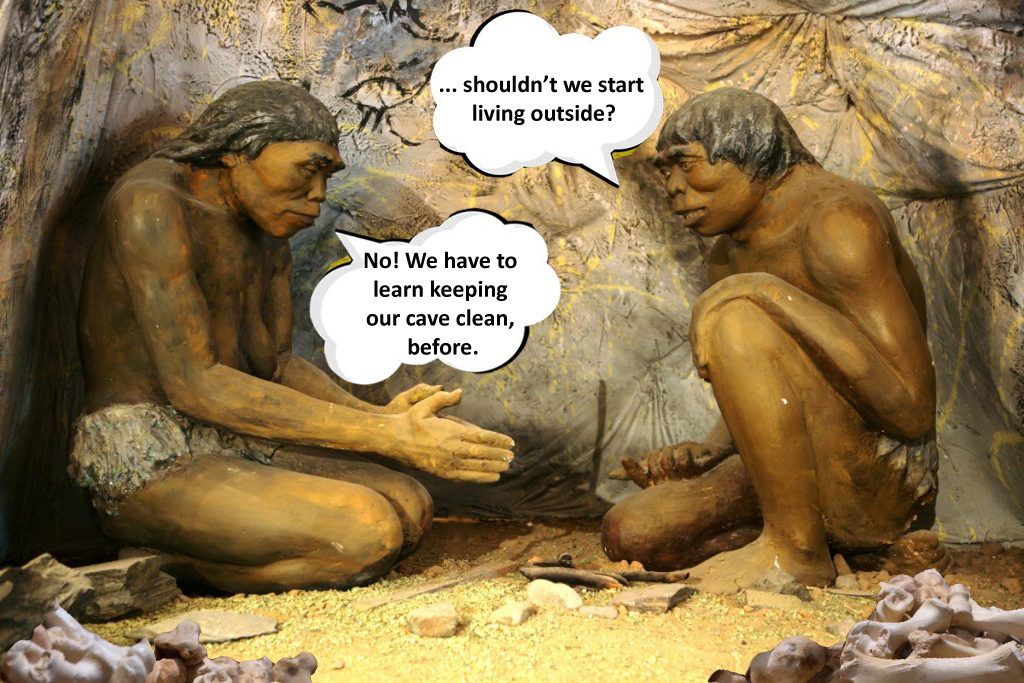
Many, even inside the space community, will argue that we should “solve problems on Earth, before going to space”. Continue reading →

When we, Space Renaissance members, spoke of the many dangers humanity was facing on the planet, which we felt could only be addressed by having humanity move out into space, I doubt we imagined we would be facing two of these dangers in a few years. Yet at this moment, most of us are in quarantine and out of work.
Governments around the world and their people are trying to deal with a health and economic crisis with no precedent, and some countries are even trying to ignore the danger to see if it simply goes away on its own. But our old world strategies have been useless to face the crisis, and in a few months the world’s most powerful leaders imposed controls, quarantines and other strategies to limit harm while technology caught up to the pandemic. Continue reading →

Key concepts:
Why are governments useful in times of big crisis? Because they can recover the economy, printing currency, supporting stock markets after catastrophic events, such as pandemics.
The extraordinary growth of our civilization in this closed world has reached the limit.
The closed world syndrome puts civilization at risk, with many threats such as pandemics, climate changes, big migrations.
Expanding civilization into outer space is even more urgent in the new context determined by the above threats.
In these days, in which the worst dystopian science fiction seems to have invaded reality, many are led to reflect, in particular, on the fact that the extraordinary growth of our civilization in a closed world has reached a limit. Some practical philosophical reflection may therefore be welcome. Different futures await us, depending on the choices we will make. Continue reading →
Space Renaissance International, together with Lifeboat Foundation, Team Synergy Moon and Seanasol, just launched a world wide initiative, called “The Civilian Space Protocol” (CSP). The protocol is a letter that we plan to send to the Governments of 194 Countries of Planet Earth, to solicit them to spend at least 20% of their military budget to fund the civilian space development. Continue reading →
The green revolution is necessary but not enough!
It is not a matter of “saving the planet”, but saving civilization and its development.
The only sustainable development is the one that aims at space, using the immense resources of the Solar System.
A 18th point shall be added to the agenda of the 17 UN 2030 sustainable development goals (SDG):
Space Community: let’s wake up and fight for our solutions!
Stop following or denying the insufficient closed world recipes! Continue reading →
A million and a half students, even very young ones, took to the streets Friday March 15th, in two thousand cities around the world, for the climate, responding to a Greta Thunberg’s call. Greta is a 16-year-old student in Stockholm: “I will not stop. Not until greenhouse gas emissions have fallen below the alarm level.” Considering the great support she had, it would seem that students were not waiting for anything else, with great outcry of the ecologists of various tendencies, who have for years repeated the same call, without being able to arouse mass movements of this magnitude. Continue reading →