
The incorporation of the UK Chapter will be on the 11th of July. The meeting will start 11.00am at the Dornie Village Hall Committee Room, and will continue after lunch.
9.30 visit of the Dornie Castle.
Introductory speeches (at least) by:
– Marianne Rugard (chair of the SRI UK Chapter),
– Adriano Autino (Space Renaissance International, President),
– Patrick Collins (SRI, VicePresident),
– David Ashford (Bristol Spaceplanes).
The founders will discuss the basic strategic plan for SRI UK, and how to promote space tourism and civilian astronautics development. The main projects and activities to be developed will be presented and discussed as well.
The official incorporation ceremony of the SRI UK Chapter will close the meeting.
News
SRI News
WELCOME BACK SAMANTHA!… AND WHEN WILL WE TAKE OFF?
Samantha Cristoforetti is safe back on Earth, after personal record of 200 days in space.
Turin, June 11, 2015 – Today is a day worthy of celebration. AstroSamantha has returned to Earth after a historic stay on board the International Space Station. Welcome back Samantha, and thank you for the scientific, popular and human commitment that you have demonstrated.
It seems logical, however, to ask some questions of the space agencies:
- Why, 54 years after Yuri Gagarin’s first flight in orbit, are there still no space transportation services for civilian passengers?
- Why is space flight still, in effect, accessible only to military astronauts, and to a few “tourists”, able to spend $30 million after signing a total liability release?
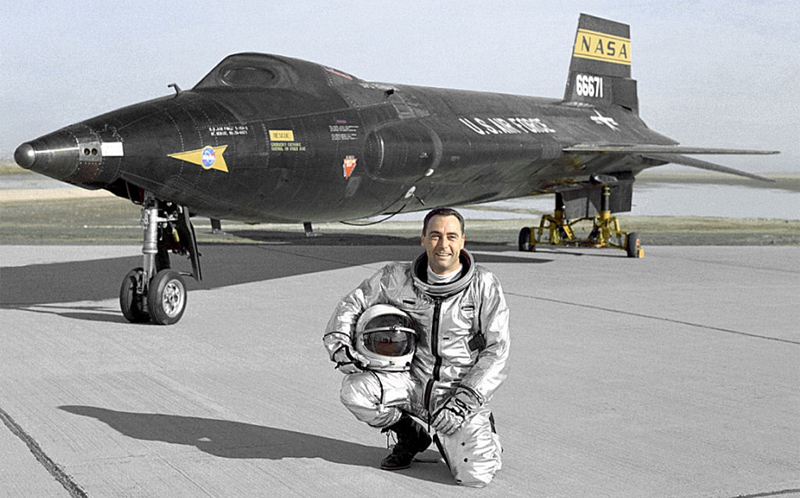
- Why do we still not have fully reusable spacecraft, 46 years after the NASA X15 space plane was developed and made 200 flights at suborbital altitude? Why did NASA stop this very promising line of development, despite the huge number of studies in the ‘70’s, proving fully reusable two-stage vehicles, are technologically feasible?
- Why today, to reach the Space Station, are we using the same machine, Soyuz, whose first flight was 25 years before the space shuttle, in 1966?
- Why are courageous enterprises, like Space X, Virgin Galactic, Bigelow, ShipInSpace and others left to their own devices to attempt to downsize the cost of Earth-Orbit transportation, and are, in fact, opening the space frontier to private activities and to civilian passengers?
- Should it not be the main objective of space agencies and governments, to boost the recovery of the world economy, to create opportunities and jobs for young people?
- And why is the so-called “Astronautic Club” still restricted to the US, Russia and China, while Europe has given up developing its own orbital vehicle suitable for transporting humans into space?
We will try to answer these and other questions during our next conferences:
- in Dornie (Scottish Highlands), July 11th, on the occasion of the founding of the SRI UK Chapter
- in Torino (Italy), at Politecnico University, October 7th, during the conference: “THE RISING INDUSTRY OF THE CIVILIAN SPACE FLIGHT”
- at the 2016 SRI World Congress “SPACE, NOT WAR!”; see the call to action
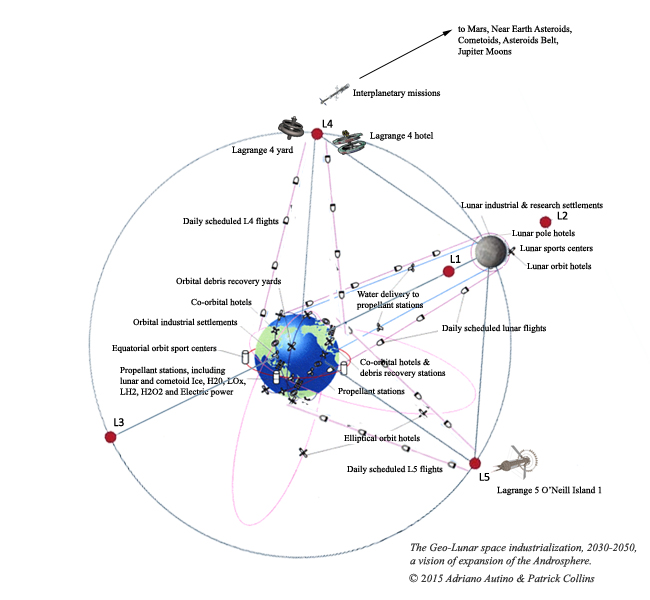
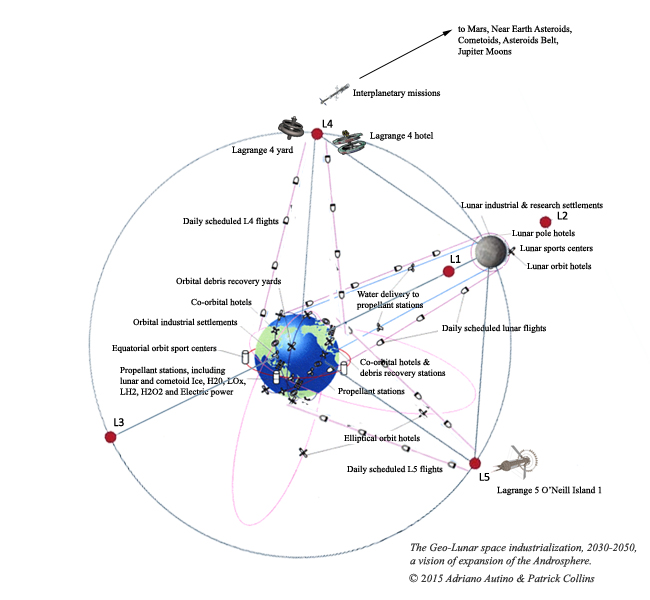
The development of civilian astronautics can create millions of new skilled jobs, and in this scenario, opportunities for integration of young graduates and undergraduates in the working world will be increased by several orders of magnitude: space planes, orbital hotels, factories and yards for space vehicles assembly and logistics infrastructures, energy and manufacturing, toward the geo-lunar space industrialization. A thrilling perspective, toward which Space Renaissance is working hard, with its restless public support.
BECOME ONE OF OUR MEMBERS: REGISTRATIONS ARE OPEN
To register, simply visit www.spacerenaissance.space, the membership registration page
Membership offers the following advantages:
- A membership card 2015 Space Renaissance International
- The right to vote in plenary meetings of the Space Renaissance International
- Invitations and possibilities for active participation in the organization’s initiatives, conferences, seminars, annual projects, call for papers, etc.
- Privileged access to conventions and congresses of the Space Renaissance International
- The free access to much of the material produced by SRI
We conclude with our warmest congratulations to AstroSamantha, for her great contributions to experiments performed on the ISS, and also for being able to talk to and with the people, especially the younger ones, during her stay in orbit. It is because of people like this that space is a bit more accessible to the general public. We invite you warmly to join our initiative, as many of your colleagues did, a task of great dissemination of accessibility to the space, for future generations.
SPACE, NOT WAR!
Space Renaissance International’s executive committee has adopted the theme “Space, not War” for SRI’s Second International Congress, which will be held sometime during the middle of next year in Italy, the home of the original Renaissance and SRI’s incorporation. A call for papers along the theme will be issued soon, along with an exact location and date. Participation by all space enthusiasts and organizations worldwide is invited for the conference, which also will contain a closed session for only paid SRI members who will decide the organization’s direction for the next four years.
The public conference will offer a variety of presentations and symposia on different topics as they relate to the 2016 theme, which recognizes that war is a tragic and wasteful legacy of our past that humanity can no longer afford, whereas our future lies in peaceful extraterrestrial development. Approval of the Congress came during a meeting by the SRI executive committee and national chapter leaders on March 15.
Call to action!
Facing continuing brutality despite all of its advances, civilization, forced into the now narrow space of the pre-Copernican closed world, needs all humans to embrace the arms of culture, science, philosophy and technology to open the world to a new renaissance, the space renaissance.
We do not like to comment on events the same day or too close to their occurrence — even when they are so horrendous — like the ones we have seen a few weeks ago in the attacks on the editors of Charlie Hebdo and the kosher supermarket in Paris. But every day we have to record new merciless abominable murders. We, sincere humanists, are shaken, even personally, when death is caused intentionally by ideological madness, in France or anywhere. We are shocked by the massacre of 140 students at a school in Peshawar, Pakistan, recently perpetrated by Taliban, and by the mass exterminations by Boko Haram in Nigeria and other senseless killing. In the same way we are morally devastated by Western military reactions, when they cause the death of civilians, women and children, and further jeopardize already badly hit economies, instead of bringing relief and aid to the honest citizens, eager to work and progress.
We opted therefore to leave anger and pain to subside a bit, before our say. In fact, should we allow anger and pain to dictate our agenda, we would do nothing but support the terror. Keeping a cool head and a calm and mature reasoning skill, we definitely pronounce, not to fight Islam, or to embark the Western countries in a fruitless “clash of civilizations.” We shall acknowledge the reality for what it is: the worsening conflicts and the global economic crisis, raging for almost seven years, are due to the growing fear that pervades all of the populations of the world. The people of the so-called advanced countries are seeing their privileges gradually decaying, due to lack of new industries. The emerging countries already glimpsed the limits of their hope for growth, due to the finite resources and energy of our mother planet. The people of the so-called Third World still do not even perceive this time as mature for their industrial development. Abortive revolutions and unfulfilled hopes are fertile ground for all terrorism.
Read the whole newsletter here: SRI Newsletter 03 February 2015
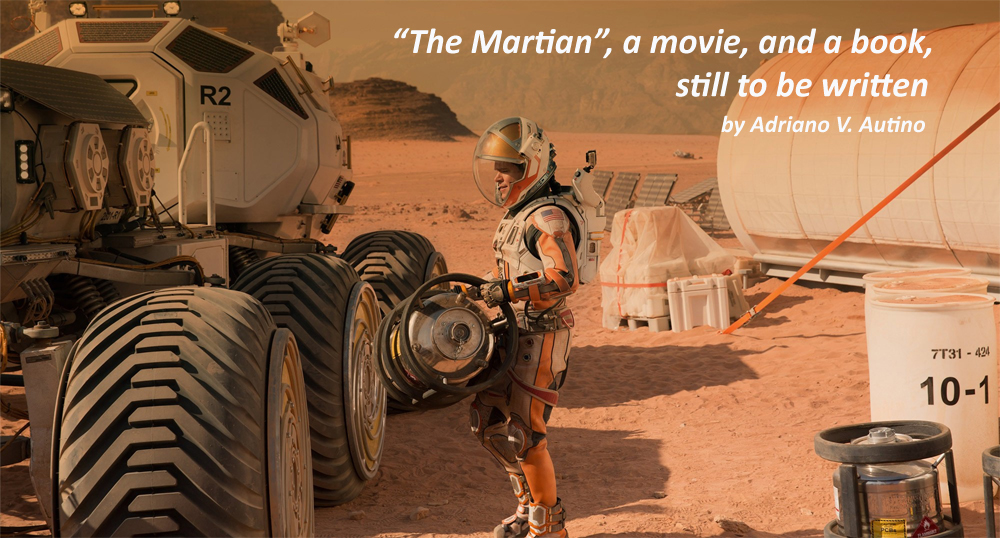
Mars, like the Moon? …. but … we would really put a great distance from the awful stench of death that rises from the old world …
What follows is my personal opinion. I understand that this topic is a quite controversial one, but it is time for a serious discussion about priorities, since the current world situation will not allow many more strategic mistakes. However my constructive critics are not intended to offend, and I highly esteem America and what it made in space, however the largest and most advanced space program of the world.
Forty five years after the historic landing of Neil Armstrong and Buzz Aldrin on the Moon, without forgetting the good Michael Collins, who waited patiently for them in orbit, NASA officially announced a manned mission to Mars by 2030. By this announce NASA expresses, at least, a large confidence in the availability of the United States taxpayers to keep on supporting the space agency’ programs, even beyond the “low cost” policy, to which many today charge the responsibility for the space program’ failures and delays.
I take the freedom to applaud the NASA plan with several reserves and no little suspicion. Perhaps, when President Bush announced in 2004, the famous manifesto “Moon, Mars and Beyond”, did he aim to propose and consolidate, in fact, a methodology, more than a plan? Such methodology had already borne fruits, excellent for bureaucracies, but harbingers of stagnation and deepening global crisis for the entire human community.
To put it more explicitly: 1) what else does NASA space program include, before 2030? and, 2) what does NASA plan to do after the Mars mission, provided that it will develop and will be successful?
It is precisely the lack, once again, of a global vision, that raises my eyebrow. After the “conquest of Mars” NASA will sit for another fifty years on “laurels”, enjoying gifted public money?
Who does assure us that the 2030 Mars mission is not simply a way to revive a NASA strategy equal to the one of the last 45 years, dedicated solely to exploration and scientific research, and yet rigidly and stubbornely closed to the industrialization of the geo-lunar space, use of asteroids resources for the construction of the space infrastructure, a true expansion of civilization beyond the now narrow boundaries of our planet?
It should be clear, nowadays, even outside the international space community, that if the high frontier had been opened to privates thirty or forty years ago, as it was quite possible, likely today the global economy would be growing at double digits, and this horrible crisis would have been avoided. The fundamental question then is the following one: do they finally understood the lesson, or not? Did the space agencies finally understand their deep social responsibility, toward the civilization?
Should the announced program had made the mission to Mars as a spearhead of a true expansion and colonization plan, I’d applaud without reservation! A space program coherent with the current state of the world should definitely claim the leadership of a new industrial development, with primary emphasis on the construction of an orbital city, located at a Lagrange Point between Earth and the Moon, permanent stations on the Moon, to extract and process raw materials, capture near-Earth asteroids in order to use their raw materials, mainly virtually pure minerals. Not to mention that, in a contest of the world economy strong expansion, thanks to the development of civilian astronautics, both the Mars mission, and especially the subsequent initiatives for permanent settlements, would be much more sustainable. Meanwhile, the Twenty First Century Space Program should accelerate the development of Earth to Orbit fully reusable vehicles, develop orbital workshops and interchange stations, orbital hotels, to accommodate a growing population of space workers. And, also, to push hard the accelerator on studies for protection from solar heavy radiation and on the bio-technologies needed to sustain life in artificial environments. Should the NASA program include all of the above, the Mars mission would not appear as yet another “cathedral in the desert”, designed solely to seduce the taxpayers desire for adventure, keeping them well-chained to their seats, watching space exploration on TV … or , paraphrasing the much more poetic Herzog’s Fitzcarraldo, the theater of opera in the middle of the Amazon rainforest!
More and more we feel like the poor geese, nailed to a wood plank, to harvest the fois gras …
Meanwhile, in absence of a genuine ethically superior initiative, opening the frontier and achieving new resources, the terrestrial conflicts increase, rather than decrease, and not only in pre-industrial countries, but also in the heart of Europe.
And the stench of death rises beyond the bearable threshold, especially for those who love the wide spaces and freedom …
The SRI international Congress to be held in July 2015 (SRI Newsletter)
The SRI Executive held a meeting Sunday June 22nd, and decided that the second international congress will be held in July 2015, as it was scheduled by the first congress in 2011. It was unanimously agreed that several relevant reasons exist, to undertake the congress works, not only to respect the four years frequency established by our statute.
First of all the radical innovation in our strategic plan. SRI was born as a philosophical international association, and this is what it is and wants to keep on being. End of 2012, SRI decided to build national chapters, strongly rooted on territory, where members can work together, seeing themselves in face, organizing local events, talking to the people. Nowadays we have a working chapter in Italy, Space Renaissance Italia, a new chapter in the US, Space Renaissance International USA, a chapter on the way to be incorporated in India, Karnataka, and another chapter to be incorporated in UK, Scotland.
Our Theses, written in 2011, need to be updated as well. Many things occurred in the world, confirming our analysis, that expanding civilization into space is an essential condition to its survival: the conflicts for the remaining earthly resources are worsening. Opening the high frontier will allow the advanced countries, thanks to their technology, to “unplug” from the disastrous confrontation with tribal societies, and to become a moral model for the young people of those countries, removing them from the suicidal philosophy of the Jihād, and achieving them to the noble big project to assure new resources, energy and space for the whole civilization.
Read the whole newsletter here: SRI_Newsletter_24062014: The SRI international Congress to be held in July 2015
SRI Takes its ‘Space Renaissance’ to ISDC – Press Release
SRI successfully took its version of the renaissance to the Space Renaissance-themed International Space Development Conference in Los Angeles.
Adriano Autino, the president of Space Renaissance International, along with Space Renaissance Italia’s artistic director, Elena Cecconi, and SRI-USA President Walter Putnam presented the organization’s case for space development in person during the event last week sponsored by the National Space Society.
Read the Press Release here: SRI Takes its ‘Space Renaissance’ to ISDC – Press Release SRI_Release_22.05.2014
The power of ideas: the messages of the Space Renaissance Italia’ congress – by R. Russo
The de-growth is an ominous prospect for humanity. The expansion into space is inevitable and urgent. Space tourism: the first mature sector toward civilian astronautics. The multi-culturalism as an essential tool to reach the conscience and to let people understand that space is not that far as it is perceived.
These are some of the conclusions of the Space Renaissance Italia’ national congress, held on May 8th and 9th this year at the Politecnico University of Milano, entitled “Space without frontiers: a greater world is possible!” An unique in its kind event, about which many were skeptic, that instead proved to be a great success. Futurists, scientists, philosophers, engineers, humanists and trans-humanists, technologists, musicians, and writers. And more, communication, television and films experts, as well as students. All of them integrated into the debate, giving rise to a deep cross-fertilization along the thin line of the Space Renaissance philosophy, which sees the expansion of civilization into space the healthiest and urgent solution, and perhaps the only one, to the crisis of growth that our civilization is facing, while the natural resources of our beloved Mother Earth are now insufficient to support its development. Echoing what Konstantin Tsiolkovsky said, humanity has to leave its cradle.
The conference clearly showed that we are now a mature movement, with great potential for growth, byb the way in strong agreement with the Futurists, the Trans-Humanists and with the “anthropic” imperative proposed by the Italian Institute for the Future, to ensure the long term survival of human civilization.
The development of Civilian Astronautics promises to create massive new employment, and enable definitive and permanent exit from global crisis – by A. Autino, R. Russo, P. Collins
We at SPACE RENAISSANCE have a few clear and simple concepts, of which one is: THERE IS NO GROWTH WITHOUT INDUSTRIAL DEVELOPMENT – and without growth our civilization will die. The only way to really re-start economic growth, beyond merely short-term remedies, is to boot-strap the new era of human expansion beyond the Earth’s atmosphere, by accelerating the development of low-cost space travel. We therefore propose a strongly positive strategy, aiming upwards towards this clear goal. In the present recession, many investors are keeping their money uninvested, while “waiting for better times”. But this is worse than useless: the withdrawal of such funds from circulation reduces economic activity, making the possibility of economic revival weaker and weaker. To avoid this awful scenario, the only way is to create new fields for economic growth. The most promising new industrial opportunity is to finally trigger the new industrial revolution of civilian astronautics, which can quickly reverse the crisis, re-starting an era of double-digit growth in the developed countries as well as in the recently emerging countries, thereby creating millions of new high-level and middle-class jobs, both in space and on Earth. How is this to be done? The key step, which can open a true cornucopia of virtually unlimited future development, is investing in “space tourism”, that is, passenger space travel services, starting with sub-orbital flights. This is a very low-cost new approach to space development, which will supply popular services to the general public, and open new fields for investment with unlimited potential for further growth – through large-scale orbital industries leading on to lunar economic development and beyond. The first phase of these new industries should be supported by governments with friendly fiscal policies, as governments do for other selected industries. A pool of investment funds should also be created, specifically targeted to stimulate development of civilian astronautics in its many aspects.
Download the whole newsletter here: SRI_Newsletter_04032014 The development of Civilian Astronautics promises to create massive new employment, and enable definitive and permanent exit from global crisis
by A. Autino, R. Russo, P. Collins
Risk Analysis of Climate Change, and Potential SPS Contribution to Global Warming or Global Cooling Mitigation – by Patrick Q. Collins & Marco C. Bernasconi
by Patrick Q. Collins & Marco C. Bernasconi


Space Renaissance France (French Chapter of SRI)
Space Renaissance USA, Inc. (USA Chapter of SRI)
Space Renaissance (Italian Chapter of SRI)
Space Renaissance Academy
Space Renaissance Initiative Group